
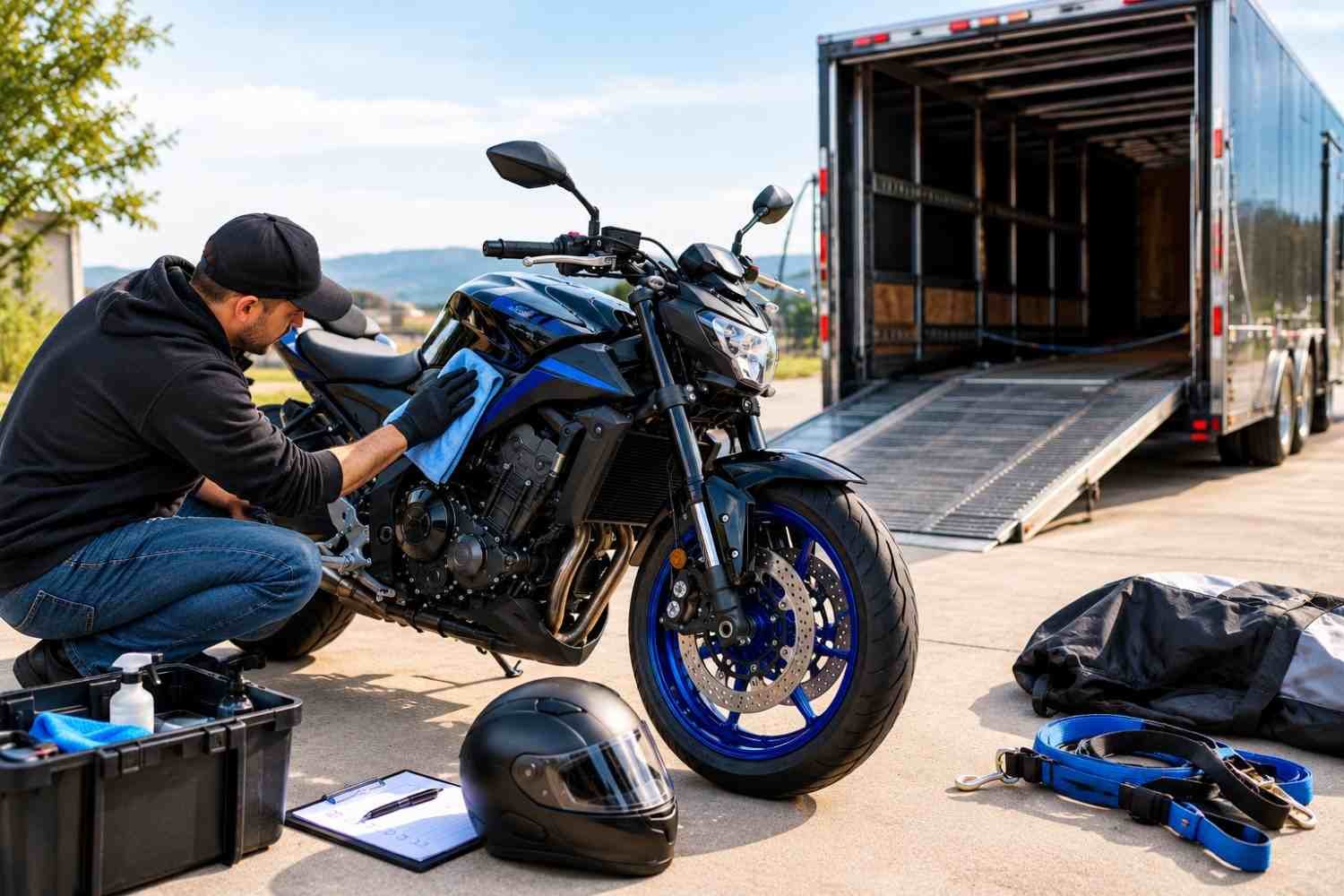
Getting a motorcycle ready for shipping is mostly about making sure the bike can be inspected, loaded, and transported without avoidable problems. You do not need to dismantle it or spend money on unnecessary accessories. What matters is knowing the motorcycle’s condition and telling the transport company about anything that could affect the pickup.
This becomes especially important when the bike is being collected from a seller, stored in a garage, or shipped to another state while you travel separately.
A motorcycle with a dead battery, aftermarket handlebars, or a loose windshield may need different handling from a standard bike that starts and runs normally. Sorting out those details before pickup makes the arrangements much clearer.
Look Over the Motorcycle Before Doing Anything Else
Start with a slow walk around the bike. Look at the fuel tank, fairings, mirrors, handlebars, wheels, exhaust, and any custom parts. You are not trying to perform a full mechanical inspection; you simply want to notice anything that the transport company should know about.
Check beneath the motorcycle for signs of leaking fluids. If you find a leak, explain it before booking or pickup rather than waiting for the driver to discover it.
Pay attention to loose body panels and accessories, too. A mirror that moves freely or a luggage attachment that is not firmly secured could become a problem during loading.
If the motorcycle has been sitting unused for a long time, mention that when arranging transportation. A bike that has not been started recently may have a weak battery or another issue that affects how it can be moved.
Clean It Enough to See Its Condition
There is a practical reason to wash a motorcycle before shipping: dirt can hide scratches, chips, and marks on the bodywork.
You do not need a professional detail. Clean the areas that will be inspected, particularly the tank, painted panels, wheels, and other exposed surfaces. Let the bike dry before taking photographs.
This is worth doing even if the motorcycle is not new. Existing wear is easier to identify when the surface is clean, and you can record its condition without guessing which marks were already there.
For a custom bike with a special finish, take extra care when photographing areas where scratches might be difficult to see.
Take Pictures Before the Bike Leaves
Use your phone to make a record of the motorcycle’s condition before handing over the keys.
Take clear photographs of both sides, the front, the rear, the tank, the wheels, and any visible damage. If there is a scratch on a fairing or a chip on the tank, take one wider photograph showing its location and another close-up.
Keep the original pictures until delivery is complete.
The driver should also document the motorcycle’s condition as part of the pickup process. Look at that record before signing and point out any existing damage that has not been described correctly.
When the motorcycle arrives, compare its condition with the pickup record and your photographs. If you notice a concern, document it and follow the carrier’s process for recording it before completing the handoff.
Remove Anything That Should Not Travel With the Bike
Saddlebags, top cases, and storage compartments can make a motorcycle useful for carrying everyday items. They are not a good place to leave valuables during shipping.
Remove cash, documents, electronics, tools, riding gear, and personal belongings. Check the compartments carefully; it is easy to forget something tucked inside a side case.
Loose or detachable accessories deserve attention as well. A phone mount, removable windshield, luggage rack, or other attachment may need to be secured or taken off, depending on its design and the transport company’s instructions.
Do not automatically remove parts that are firmly installed. Ask the transporter what should stay on the bike. If the motorcycle has unusual accessories or dimensions, explain those details before pickup so the loading arrangements can be assessed.
Tell the Transporter Whether the Motorcycle Runs
One of the most useful things you can do is describe the bike’s condition accurately.
Can it start? Does it roll? Is the battery working? Are the tires usable for moving it during loading? If the answer to any of these questions is no, mention it before the shipment is arranged.
A motorcycle that cannot start or move under its own power may require additional equipment or a different loading method. A damaged wheel or other mechanical problem can also affect the arrangements.
There is no need to repair every mechanical issue simply to ship the bike, but the transport company must know what it is collecting.
Avoid making last-minute changes to the battery or other components unless the carrier asks you to. Preparation instructions can vary depending on the motorcycle and the equipment being used.
Ask About Fuel Before Pickup
Do not guess how much fuel should remain in the tank.
Ask the transport company for its specific instructions. Fuel requirements can vary by carrier and transport arrangement, so advice from another motorcycle owner may not apply to your shipment.
The same approach applies to alarms, immobilizers, and unusual ignition systems. If the bike has a security feature that could prevent it from being moved, explain how it works before the pickup date.
These are small details, but they are much easier to resolve while the shipment is being arranged.
Make Sure the Bike Can Be Loaded Properly
A standard street motorcycle may be straightforward to load, but not every bike has standard dimensions.
Extended forks, lowered suspension, wide handlebars, a sidecar, or custom bodywork can change the space and equipment required. Give the transport company the correct year, make, and model, and mention any modifications that could affect loading.
Ask how the motorcycle will be supported and secured during transportation. The carrier should have equipment suitable for motorcycles rather than relying on assumptions about how a bike should be handled.
If the motorcycle is especially valuable or has a delicate finish, you may prefer additional protection during the trip. Our guide to open vs. enclosed motorcycle transport explains the differences between the two options and what to consider when choosing between them.
Confirm the Pickup Arrangements
Having the bike ready is only part of the preparation. The driver also needs to be able to reach the pickup location.
Provide the full address and a working contact number. If the motorcycle is stored in an apartment complex, gated community, dealership, or garage with restricted access, explain that before pickup.
A large transport truck cannot safely reach every driveway or residential street. Depending on road access and local restrictions, a nearby meeting location may be necessary.
If someone else is handing over the motorcycle, make sure they know when the pickup is expected and where the keys are. They should also be able to walk around the bike with the driver and review the condition report.
For customers who want pickup and delivery arranged around their locations, NG Auto Haulers offers door-to-door bike shipping.
Keep the Keys and Documents Ready
Have the necessary keys available when the driver arrives. If the bike has separate keys for the ignition, steering lock, or other equipment, explain which ones are needed.
Follow the transport company’s instructions regarding any documents required for the shipment. Keep personal identification, valuables, and important paperwork with you instead of leaving them in the motorcycle’s storage compartments.
At pickup, check that the motorcycle’s details are correct on the transport documents. Read the condition notes carefully before signing, and keep a copy for your records.
You should not have to reconstruct the pickup details from memory several days later.
What to Check When the Motorcycle Is Delivered
When the bike reaches its destination, allow time to inspect it before the handoff is finished.
Look at the same areas you photographed before transport. Check the tank, fairings, mirrors, wheels, exhaust, and any other parts where you had recorded existing damage.
Compare the motorcycle with the pickup photographs and the condition report. If something looks different, take pictures and raise the concern with the driver before completing the delivery paperwork. Follow the carrier’s instructions for recording any issue and keep copies of the relevant documents.
A careful inspection is especially worthwhile for motorcycles with custom paint or parts that are expensive to replace.
A Few Things Worth Doing Before the Driver Arrives
Before pickup day, make sure you have cleaned and photographed the motorcycle, removed personal belongings, and explained any mechanical issues or modifications. Confirm the carrier’s requirements for fuel, keys, and accessories instead of assuming every company follows the same procedure.
Double-check the pickup address and contact details. If someone else will meet the driver, make sure they understand the arrangements.
You do not need to do more than the motorcycle requires. The aim is to make its condition clear and give the transport company the information it needs before loading begins.
Still Deciding How to Ship Your Motorcycle?
Preparation depends partly on the transport method you choose, so it is worth deciding that before the pickup is scheduled.
Our guide to shipping a motorcycle in the USA covers the wider process, including arranging transportation, pickup, and delivery. For bikes that need extra protection from outdoor conditions, you can also review our enclosed bike transport service.
When you are ready to discuss the route, use the NG Auto Haulers quote request page to provide your motorcycle details, pickup location, destination, and preferred dates.
Final Thoughts
Preparing a motorcycle for shipping is less about doing a long list of jobs and more about avoiding surprises.
Make the bike’s condition easy to inspect, take photographs, remove loose belongings, and tell the transport company about anything that could affect loading. Confirm the carrier’s instructions rather than guessing about fuel, batteries, or accessories.
Once the motorcycle arrives, check its condition before completing the hand off.
Those simple steps help you keep a clear record of the bike and make the arrangements easier for everyone involved.