
Buying a motorcycle in another state can be exciting. Figuring out how to get it home is a different matter.
The same problem comes up when people move for work, relocate to a warmer state, or want their motorcycle waiting for them at a second home. Riding the entire distance is not always practical, especially when the trip involves several days on the road or the bike is a collector’s model that its owner would rather not put through a long journey.
Motorcycle shipping offers another way to handle the move. The trick is knowing what to arrange before the bike is collected and what to check when it arrives.
First, Think About the Motorcycle You’re Shipping
A small street bike and a large touring motorcycle are not exactly the same job for a transporter.
The bike’s size, weight, condition, and design can affect how it needs to be loaded and secured. A lowered motorcycle, custom build, trike, or bike fitted with a sidecar may require extra attention as well.
When you contact a transport company, provide the motorcycle’s year, make, and model. Be upfront about modifications and mechanical issues, even if they seem minor. If the motorcycle does not start or cannot roll, say so before a pickup is scheduled.
These details help the company work out whether its equipment is suitable for the job. Leaving them until the driver arrives can create unnecessary complications.
Which Type of Motorcycle Transport Should You Choose?
The right option depends on your bike and how you want it handled during the trip.
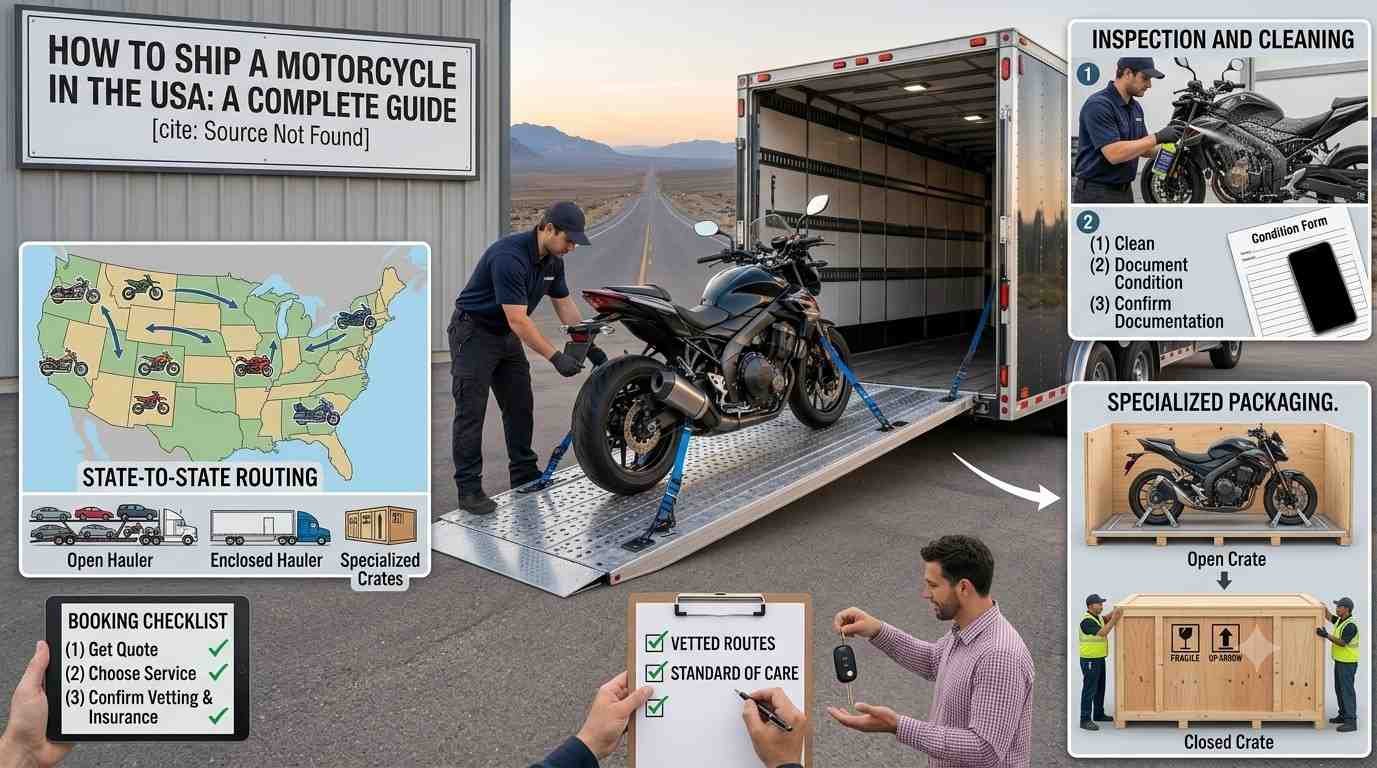
Open transport is commonly used for standard motorcycles. The bike travels on an open carrier, secured for transportation, and remains exposed to outdoor conditions along the way. For many everyday motorcycles, this can be a practical arrangement.
Enclosed transport is worth considering when the motorcycle needs additional protection from weather and road debris. Owners of restored classics, collectible bikes, custom motorcycles, or machines with particularly valuable finishes may prefer this option.
NG Auto Haulers offers enclosed bike transport for customers who want their motorcycle carried inside an enclosed trailer.
Neither method is automatically the right choice for every rider. Consider the condition and value of your bike, then discuss the available arrangements before booking.
Choosing a Transport Company Takes More Than a Quick Search
You will probably find several companies willing to move your motorcycle. The important question is what happens after you request a quote.
Find out whether you are speaking with the carrier that will transport the bike or a broker arranging transportation through another company. Both can be part of the process, but you should understand the arrangement and know who your main contact will be.
For interstate transport, the Federal Motor Carrier Safety Administration provides information to help consumers check transporter and broker registration. You can review its consumer advisory about automobile transporters.
It is also worth reading customer reviews rather than relying entirely on a company’s own claims. Look for specific comments about communication, pickup arrangements, and how issues were handled. A detailed review can tell you more than a short comment saying that everything was great.
Before making a commitment, read the agreement and make sure you understand the service being arranged.
Be Clear About Pickup and Delivery
People often prefer having a motorcycle collected near home and delivered close to their destination. This is why door-to-door bike shipping can be convenient for interstate moves.
There is one practical detail to remember: a transport carrier is much larger than an ordinary motorcycle or passenger car. Narrow residential streets, parked vehicles, low branches, and restricted access can prevent a driver from reaching a particular address safely.
If that happens, a nearby location with better access may be needed. It is worth discussing this possibility before pickup, especially if the motorcycle is at an apartment complex, a gated community, or a property with a narrow entrance.
Give the company the actual pickup and delivery addresses rather than only the names of the cities. Specific information makes it easier to discuss the arrangements for your route.
Getting the Bike Ready for Collection
You do not need to dismantle your motorcycle before shipping it. A few sensible preparations are usually enough, along with any instructions provided by the transporter.
Start by removing loose belongings and accessories that could shift or come off during the trip. If you have saddlebags, luggage, a detachable windshield, or other removable equipment, ask whether it should stay on the bike or be removed.
Check the motorcycle for obvious leaks and look at the tires. Tell the company about any known mechanical problems. If the bike has an alarm or an unusual starting procedure, explain that before the driver arrives.
Ask about fuel requirements rather than assuming the same rule applies to every carrier.
It is also a good idea to clean the motorcycle before the inspection. Dirt can hide scratches and small marks, while a clean surface makes it easier to record the bike’s existing condition.

Take Photos Before Handing Over the Keys
This step is easy to overlook when you’re busy arranging a move, but it is worth doing.
Use your phone to photograph the motorcycle from the front, rear, and both sides. Take closer pictures of the fuel tank, fairings, mirrors, wheels, and any existing scratches or paint damage. If the bike has custom parts, make sure those are visible too.
The driver should record the motorcycle’s condition in the relevant transport paperwork. Review those notes and point out anything that has been missed before signing.
Keep your photographs and a copy of the paperwork until the motorcycle has been delivered and inspected again. They give you a clear record of the bike’s condition before the trip.
What Happens After Pickup?
Once the motorcycle has been collected, it travels according to the carrier’s route and schedule. The driver may have other deliveries or pickups along the way, so the journey may not follow the most direct route from one address to the other.
Weather, traffic, road conditions, and scheduling can also affect arrival time. If you need the motorcycle by a particular date, explain that when you first contact the company. Ask what delivery window is realistic for your route rather than making plans around an unconfirmed arrival time.
It helps to know how updates will be provided and whom to contact if you have a question during transportation.
If you are new to arranging vehicle transport, the NG Auto Haulers guide to how the process works explains the general steps from booking through delivery.
Check the Motorcycle Before Completing Delivery
When the bike arrives, take a few minutes to look it over before the handoff is finished.
Compare its condition with the pictures you took before pickup and the notes recorded on the transport paperwork. Pay attention to the areas you photographed, including the tank, fairings, mirrors, wheels, and any previously damaged sections.
If you notice something that concerns you, document it and bring it to the driver’s attention before completing the delivery process. Follow the carrier’s procedure for recording any condition concerns, and keep copies of the relevant paperwork.
There is no need to rush. A careful inspection gives you an opportunity to identify any differences while the delivery details are still available.
Is Shipping Better Than Riding the Motorcycle Yourself?
That depends on the trip.
For someone moving a short distance, riding the bike might be the simplest option. A much longer journey is another matter. Several days on the highway can mean overnight stops, changing weather, extra mileage, and time away from work or family.
Shipping can also be useful when you’ve purchased a motorcycle from another state and cannot collect it personally, or when the bike needs to be at a seasonal home before you arrive.
Owners of older, restored, or collectible motorcycles may have other reasons for choosing transport instead of riding the entire route. The decision comes down to your schedule, the motorcycle, and how you want to handle the journey.
A Few Details Worth Settling Before You Book
Before confirming transportation, make sure the company has the correct motorcycle details and both addresses. Explain whether the bike runs, mention any modifications, and ask how loading and pickup will be handled.
You should also understand which transport method is being arranged, how you’ll receive updates, and what paperwork you’ll need to review at pickup and delivery.
These conversations do not have to be complicated. They simply help both sides understand what the shipment involves before the motorcycle is collected.
Arrange Motorcycle Shipping Around Your Needs
Every motorcycle shipment is a little different. A daily rider moving to another state may need a straightforward transport arrangement, while a custom or collectible bike may call for additional protection.
NG Auto Haulers provides door-to-door bike shipping and enclosed bike transport options for customers arranging motorcycle transportation in the USA. You can also explore our vehicle transport services to learn more about the available options.
When you are ready to discuss your route, use the quote request page to provide your motorcycle details, pickup location, destination, and preferred timing.
The more clearly you explain what needs to be transported, the easier it is to work out an arrangement that suits your motorcycle and your plans.