
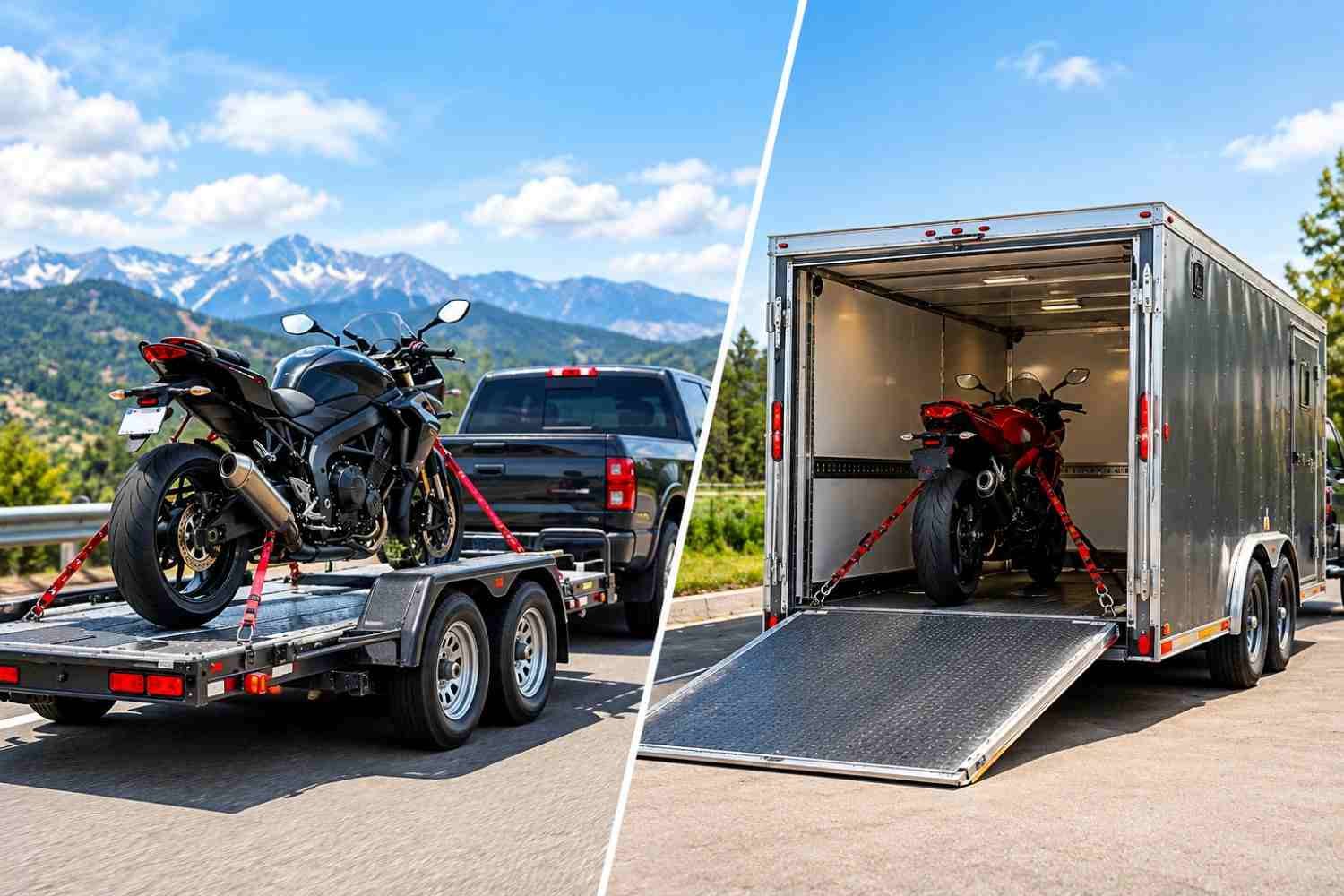
A motorcycle can be built for long highway rides and still be a vehicle its owner doesn’t want to ride across the country. Maybe you’ve bought a bike from another state, are moving to a new home, or own a machine that spends most of its time in a carefully maintained garage. Whatever the reason, arranging transportation brings up a practical question: should the motorcycle travel on an open carrier or inside an enclosed trailer?
Both options are used for motorcycle shipping in the USA, but they offer different levels of protection and different arrangements. The best choice depends on the bike, the route, and what matters most to you.
What Happens When a Motorcycle Travels on an Open Carrier?
Open motorcycle transport means the bike is carried on a trailer without a fully enclosed outer structure. It is exposed to the same general outdoor conditions encountered during a road journey, including rain, dust, and road debris.
For an everyday motorcycle, this may be a reasonable arrangement. A standard street bike that is regularly ridden may not need the additional environmental protection of an enclosed trailer.
Still, don’t assume every open carrier is suitable for motorcycles. The equipment needs to support the bike properly, and the loading method should suit its design. Ask how the motorcycle will be positioned and secured before you agree to the shipment.
It is also worth mentioning anything unusual about the bike. Extended handlebars, modified suspension, a sidecar, or other aftermarket parts may affect how it can be transported.
What Changes With Enclosed Motorcycle Transport?
With enclosed transport, the motorcycle travels inside a covered trailer rather than on an exposed carrier. The trailer provides a physical barrier against direct weather exposure and road debris.
That difference can matter when the motorcycle has a finish you want to preserve, parts that are difficult to replace, or a value that makes extra protection worthwhile.
Consider a restored motorcycle with fresh paint and polished chrome. Its owner may have spent considerable time finding the right parts and getting the finish exactly right. Keeping the bike inside a covered trailer may offer peace of mind during a long-distance move.
The same consideration applies to collectible motorcycles, custom builds, and certain luxury models.
NG Auto Haulers offers enclosed bike transport for customers who want their motorcycles transported inside a covered trailer.
An enclosed trailer does not remove every transport risk, however. Proper loading, securement, inspection, and suitable cargo coverage remain important whichever option you choose.
A Daily Rider and a Collector’s Bike May Need Different Things
The easiest way to approach this decision is to look at the motorcycle itself.
If you ride a standard motorcycle regularly, its purpose and condition may make open transport a sensible option. You may be more concerned with getting the bike collected and delivered according to the agreed arrangement than with keeping it away from every outdoor condition.
A vintage motorcycle presents a different situation. Original paint, uncommon body panels, and older components may be difficult or expensive to replace. In that case, enclosed transport deserves closer consideration.
Custom motorcycles also need individual attention. A bike with unusual dimensions may not fit the same way as a standard model, even if both have similar engine sizes. Share its dimensions and modifications with the transport company rather than assuming the trailer can accommodate it.
If the motorcycle is particularly valuable, ask about the carrier’s cargo coverage and any applicable exclusions or limitations. Choosing an enclosed trailer does not automatically mean every possible loss is covered.
Does a Long-Distance Trip Make Enclosed Transport Necessary?
Not necessarily.
A motorcycle traveling between nearby cities and one crossing the country will spend different amounts of time in transit. A longer trip may expose the bike to changing weather and road conditions over a greater distance, so some owners prefer the extra protection offered by an enclosed trailer.
But distance alone should not decide the matter.
A well-maintained standard motorcycle may be suitable for open transport on a long route, depending on the owner’s preferences and the carrier’s equipment. Meanwhile, someone moving a valuable custom motorcycle a relatively short distance may still prefer an enclosed trailer.
Think about how the bike is used, what condition it is in, and how much additional protection matters to you. Those details are more useful than following a blanket rule that every motorcycle needs the same service.
The Loading Method Deserves Just as Much Attention
People sometimes focus so heavily on the trailer that they forget to ask how their motorcycle will actually be loaded.
Before booking, make sure the company has equipment intended for motorcycle transportation. Ask how the bike will be supported, secured, and handled during loading and unloading.
Tell the company if the motorcycle has a dead battery, cannot roll under its own power, or has a mechanical problem. A non-running bike may require additional equipment or a different loading arrangement.
The same applies to modified motorcycles. Low ground clearance, extended parts, or unusual bodywork can affect how the bike is handled.
Whether you choose open or enclosed transport, accurate information at booking helps the company decide what arrangement is appropriate.
What About Pickup and Delivery?
Open and enclosed transport describe how a motorcycle travels. Door-to-door service describes how its pickup and delivery are arranged. They are separate decisions.
With door-to-door bike shipping, the pickup and delivery plan is based on the addresses you provide, subject to safe access for the carrier.
A large transport truck cannot reach every driveway or residential street. Tight turns, narrow roads, parking restrictions, and low branches may mean the driver needs to meet you at a nearby accessible location.
Provide the actual pickup and destination addresses before the shipment is scheduled. That gives the company a chance to discuss access limitations and avoid a last-minute surprise.
Weather Protection Is Only Part of the Decision
An enclosed trailer offers a barrier against direct exposure to outdoor conditions, but you should still consider the overall handling arrangements.
How will the motorcycle be inspected? How will existing damage be recorded? Who will you contact if you have a question during the trip? What information is provided about cargo coverage?
These questions matter regardless of trailer type.
Before pickup, take clear photographs of the motorcycle from several angles. Include the tank, wheels, fairings, mirrors, and any existing scratches or damage. Review the condition report with the driver and keep copies of the relevant paperwork.
When the bike arrives, compare its condition with the photographs and pickup records before completing the handoff.
What Should You Ask Before Choosing?
You don’t need to make the booking process complicated. A few direct questions can help you understand the service.
Ask whether the carrier is equipped specifically for motorcycles and whether your bike’s dimensions and modifications are suitable. Confirm which transport method is being arranged and how loading will be handled.
You should also ask how the pickup and delivery locations will work, what cargo coverage applies, and who to contact if your schedule changes.
When comparing quotes, check that you are comparing the same type of service. An open-transport quote and an enclosed-transport quote are not directly equivalent because the equipment and protection differ.
A clear explanation of the service is more useful than choosing an option simply because its name sounds safer.
Still Planning the Motorcycle Shipment?
Choosing a transport method is only one part of arranging the move. You’ll also need to provide accurate bike details, prepare the motorcycle, confirm pickup arrangements, and inspect it when it arrives.
Our complete guide to shipping a motorcycle in the USA walks through the wider process, including booking, preparation, pickup, and delivery.
Reading both guides can help you make two separate decisions: how you want the motorcycle transported and how to organize the shipment itself.
Which Option Fits Your Bike?
For many standard motorcycles, open transport may be a practical choice when the carrier has suitable equipment and the owner is comfortable with outdoor exposure.
For a restored classic, collectible motorcycle, or custom bike with a finish you want to protect, enclosed transport may be worth considering.
Neither option automatically suits every motorcycle. The useful question is whether the transport arrangement matches the bike’s condition, your route, and your priorities.
At NG Auto Haulers, you can explore enclosed bike transport, review door-to-door bike shipping, and learn more about our vehicle transport services.
When you’re ready to discuss your motorcycle and route, use the quote request page to provide your bike details, pickup location, destination, and preferred timing.