
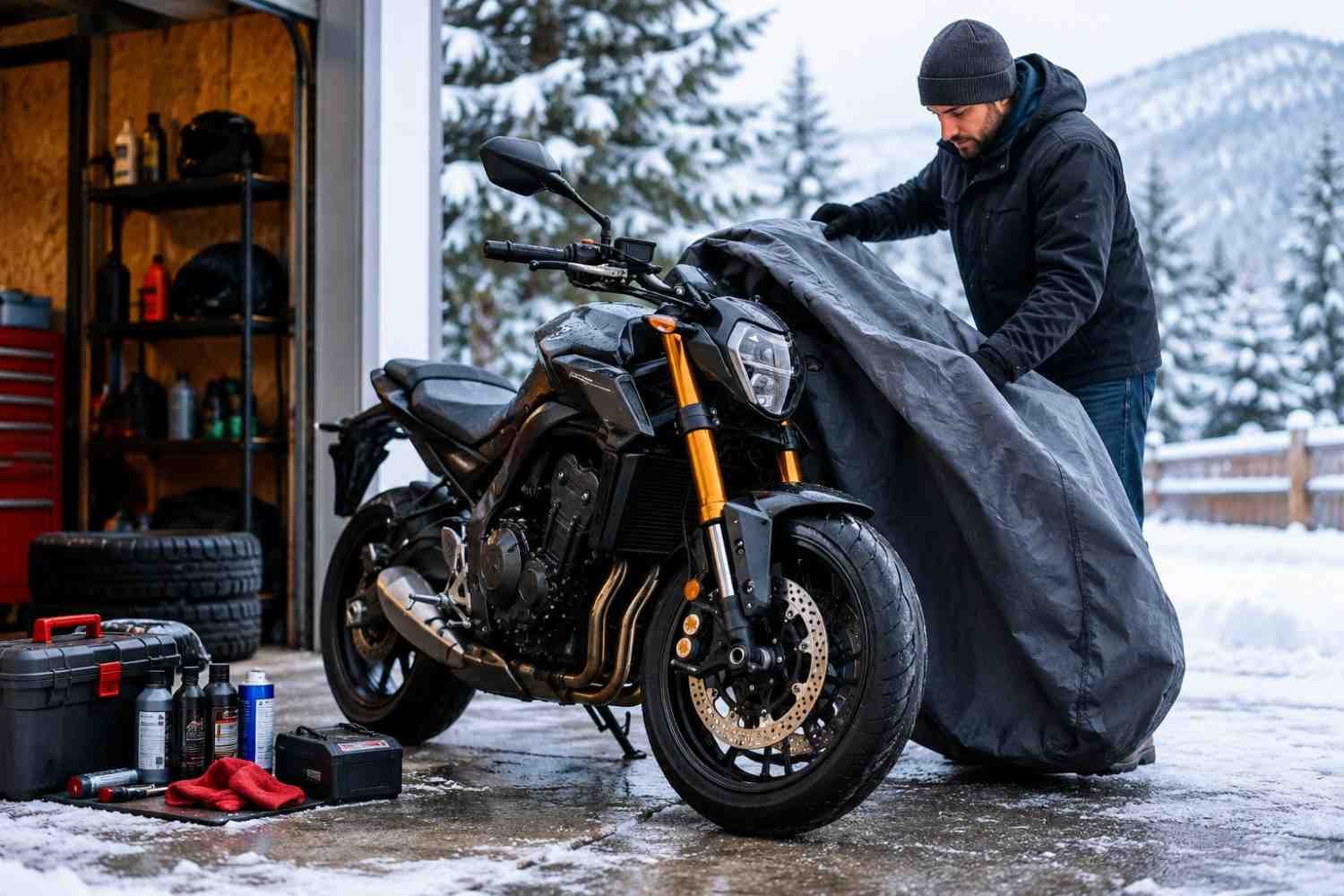
As temperatures begin to drop across much of the United States, many motorcycle owners start preparing their bikes for winter. Some riders continue to enjoy mild-weather rides throughout the year, while others put their motorcycles away until spring. Either way, cold weather and several months without regular use can create maintenance issues if the bike is not prepared properly.
Winterizing a motorcycle is about more than parking it in a garage and putting a cover over it. Fuel can deteriorate, batteries can lose their charge, moisture can encourage corrosion, and tires can develop problems during extended storage.
The good news is that a few practical steps can help keep your motorcycle in better condition until riding season returns. Here is how to winterize a motorcycle in 2026, whether you own a daily commuter, a cruiser, a sport bike, or a touring motorcycle.
1. Start With a Thorough Cleaning
Before putting your motorcycle away, wash off dirt, road grime, insects, and other residue that may have collected during the riding season. Pay attention to the wheels, frame, chain area, and other places where moisture and dirt tend to accumulate.
If you rode on roads treated with salt or other winter chemicals, cleaning the affected areas is particularly important. These substances can contribute to corrosion when left on metal surfaces.
After washing, dry the motorcycle thoroughly. Water trapped around fasteners, under the seat, or in tight spaces can encourage rust. Use motorcycle-appropriate cleaning products and avoid directing high-pressure water at electrical connections, bearings, and other sensitive components.
Once the bike is clean and dry, apply suitable protection to painted and exposed metal surfaces according to the product instructions. Keep protective sprays away from brake discs, brake pads, tires, and other surfaces where reduced friction could create a safety problem.
2. Change the Engine Oil if It Is Due
Engine oil gradually collects contaminants during normal use. If your motorcycle is approaching its scheduled oil change, taking care of it before long-term storage is a sensible part of winter preparation.
Follow the maintenance schedule in your owner’s manual, including any requirements for the oil filter. The correct oil grade and service procedure depend on the motorcycle’s engine and design.
After completing the service, check for leaks and make sure the oil level is correct. Do not assume every motorcycle needs an additional oil change solely because winter is approaching. Use the manufacturer’s service intervals and storage instructions to decide what your bike requires.
If the motorcycle also needs routine maintenance, such as spark plug replacement or a brake inspection, winter can be a convenient time to address those items before the next riding season.
3. Prepare the Fuel System for Storage
Fuel preparation is one of the most important parts of winterizing a gasoline-powered motorcycle. When fuel sits unused for an extended period, its condition can deteriorate and deposits may develop in parts of the fuel system.
For many motorcycles, a common storage procedure is to add a fuel stabilizer designed for gasoline, following the product’s directions. Depending on the motorcycle and its fuel system, the manufacturer’s instructions may also recommend filling the tank and running the engine briefly so the treated fuel circulates.
Do not apply one procedure to every bike without checking the manual. Tank materials, fuel-system designs, and manufacturer recommendations can differ. Some motorcycles have specific instructions for fuel-injected systems or other components.
Keep these points in mind:
- Use a fuel stabilizer suitable for your motorcycle’s fuel system.
- Follow the stated dosage and instructions on the product label.
- Check your owner’s manual for whether the tank should be full, partly filled, or prepared another way.
- Do not drain or modify the fuel system unless the manufacturer recommends it.
Gasoline is highly flammable. Never run the engine in an enclosed garage, and keep fuel and vapors away from flames, sparks, heaters, and other ignition sources.
4. Take Care of the Battery
A motorcycle battery can lose charge while the bike sits unused. Cold temperatures and the motorcycle’s electrical systems can make proper battery care even more important.
Start by checking the battery’s condition and terminals. If you notice corrosion, damage, swelling, or signs of leakage, follow the manufacturer’s guidance or have the battery inspected by a qualified technician.
For a motorcycle that will remain parked for several months, a compatible smart battery maintainer may help keep the battery charged. Choose a device designed for your battery type, whether it is a conventional lead-acid, AGM, or lithium battery.
Some motorcycles allow the battery to remain connected during storage, while others have specific disconnection procedures. Security systems and onboard electronics may affect the recommendation, so consult the manual before disconnecting anything.
Charge and maintain the battery in a suitable, ventilated area. Follow the battery and charger instructions, and keep sparks and open flames away.
Taking care of the battery now can reduce the chance of finding a motorcycle that will not start when warmer weather returns.
5. Protect the Tires From Long-Term Pressure Loss
Tires deserve attention before a motorcycle goes into storage. Over time, tire pressure can decrease, and a motorcycle left in the same position for months may develop localized tire deformation.
Check both tires and inflate them to the pressure specified by the motorcycle manufacturer for the relevant conditions. Do not automatically use the maximum pressure printed on the tire sidewall as the target pressure.
Inspect the tread, sidewalls, and valve stems for visible damage. If a tire has cracks, bulges, or other concerning signs, have it inspected before the bike is stored or ridden again.
Where appropriate for the motorcycle, using a suitable stand can reduce the load on the tires. If a stand is not available, follow the owner’s manual for parking and periodically repositioning the bike during storage.
Remember that tire condition can affect safety even when a motorcycle has barely been used. Check tire age and condition as well as pressure before the first ride in spring.
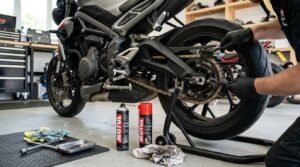
6. Clean and Lubricate the Drive Chain
If your motorcycle uses a chain drive, winter storage is a good opportunity to clean and lubricate it. Dirt and moisture left on the chain can contribute to corrosion, especially when the bike remains unused for weeks or months.
Use a chain cleaner and lubricant suitable for your motorcycle’s chain type. Follow the product instructions and the manufacturer’s recommendations for cleaning, lubrication, and chain slack.
Inspect the chain and sprockets for excessive wear, stiff links, rust, or other damage. If the chain needs adjustment or replacement, address the problem before riding again.
Not every motorcycle uses a chain. Belt-driven and shaft-driven models have different maintenance requirements, so follow the instructions for the specific drivetrain rather than applying chain care procedures to every bike.
7. Check Coolant and Other Fluids
If you own a liquid-cooled motorcycle, check the coolant level and condition before winter storage. Coolant must provide the protection specified for your motorcycle and the temperatures it may encounter.
This matters particularly in regions where temperatures can remain below freezing for extended periods. Inadequate freeze protection can cause serious damage to cooling-system components.
Do not mix coolant types simply because they have similar colors. Use the specification listed in the owner’s manual, and have the system checked if you are unsure about the mixture or condition.
It is also worth checking the brake and clutch fluids, where applicable. Follow the maintenance schedule for fluid replacement and have any leaks or unusual changes investigated before storage.
8. Choose a Dry and Suitable Storage Location
Where you keep your motorcycle can make a significant difference during winter.
An enclosed, dry, well-ventilated garage is often a good choice. Try to keep the motorcycle away from persistent moisture, roof leaks, harsh chemicals, and areas where road salt or fertilizer is stored.
If indoor storage is not available, use a motorcycle cover designed for outdoor conditions. A breathable cover can help protect the bike from dust and precipitation while allowing moisture to escape. Avoid wrapping the motorcycle tightly in material that traps condensation.
Secure the cover properly so wind cannot repeatedly pull it against the paintwork. Check the storage area periodically for signs of moisture, rust, or pest activity.
If rodents are a problem in your area, keep the storage space clean and consider suitable preventive measures. If you use any intake or exhaust plugs, mark them clearly and remove them before starting the motorcycle.
9. Take Extra Precautions in Areas With Harsh Winters
Winter conditions vary considerably across the United States. A rider storing a motorcycle in Minnesota or Michigan may face months of freezing temperatures and snow, while someone in Florida or southern California may still ride regularly through much of the winter.
For colder regions, pay particular attention to coolant protection, battery care, moisture control, and the condition of the storage space.
In coastal or humid regions, moisture and corrosion may be a greater concern than prolonged freezing. Keep the bike dry, protect appropriate metal surfaces, and inspect it periodically.
If you live where roads are frequently treated with salt, clean the motorcycle carefully after winter riding. If you plan to keep riding, winterization becomes a regular maintenance routine rather than a one-time storage procedure.
There is no single schedule that fits every climate. Match your preparation to local weather, storage conditions, and the recommendations for your specific motorcycle.
10. Cover the Motorcycle and Make a Storage Checklist
Once the mechanical preparation is complete, park the bike securely and cover it with a suitable motorcycle cover.
Before walking away, make a simple checklist of the work completed. Record any maintenance performed, the date of the last oil change, battery arrangements, and issues that need attention before the next ride.
You can also leave a visible reminder of anything that must be reversed before starting the motorcycle, such as an exhaust plug or a disconnected component.
Check the motorcycle occasionally during storage. Look for fluid leaks, moisture, pest activity, and changes in the cover or storage conditions. Periodic checks help you identify problems before they become more difficult to address.
11. Get Your Motorcycle Ready for Spring
Winterization is only half the job. Before your first ride of the new season, give the motorcycle a careful inspection.
Remove the cover and check for signs of corrosion, leaks, or damage. Remove any storage plugs or temporary protective items. Inspect the tires and set their pressure correctly, then check the brakes, lights, controls, chain or other drivetrain components, and fluid levels.
Reconnect or reinstall the battery according to the manufacturer’s procedure. If the battery will not hold a charge, have it tested before relying on it.
Check the fuel condition and follow the manufacturer’s recommended procedure for returning the motorcycle to service. Do not immediately take a long ride simply because the engine starts. Confirm that the motorcycle operates normally and that the tires, brakes, and other safety-critical components are in suitable condition.
If the bike was stored for a long period or has developed a mechanical issue, arrange a professional inspection before riding.
Final Thoughts
Winterizing a motorcycle in 2026 does not have to be complicated. Cleaning the bike, following the correct fuel-storage procedure, maintaining the battery, inspecting the tires, and choosing a dry storage location can all help protect it during periods of inactivity.
The most important step is to use the recommendations for your particular motorcycle. A small commuter bike, a large touring motorcycle, and a modern lithium-battery model may have different requirements.
With proper preparation and a few checks during storage, you can reduce avoidable maintenance problems and be in a better position to enjoy your motorcycle when riding conditions improve.
If you need to move your motorcycle to another state or to a seasonal storage location, you can learn more about motorcycle shipping across the USA and review the steps for preparing a motorcycle for shipping. These resources can help you plan the move alongside your winter maintenance.