
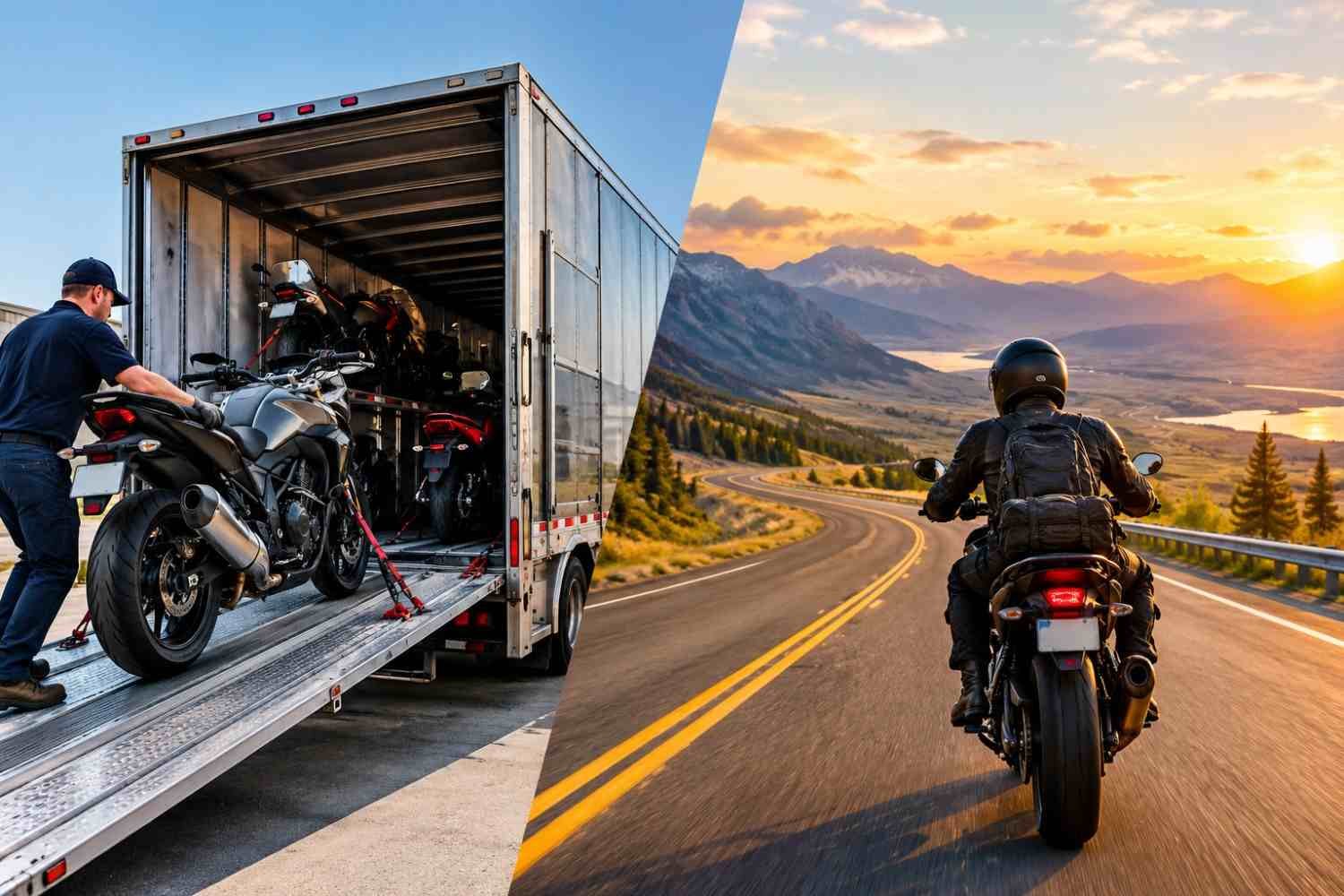
There is a big difference between riding your motorcycle across the country because you want to and riding it across the country because you have to.
Imagine you live in Pennsylvania and have bought a motorcycle in Arizona. You could fly out, collect the bike, and ride it home. That might sound like an excellent road trip, but it also means planning several days on the road, finding places to stay, watching the weather, and arriving home with thousands of additional miles on the motorcycle.
The other option is to have the bike transported and make your own travel arrangements.
Neither choice is right for every rider. The better option depends on why you are moving the motorcycle, how much time you have, what the journey will cost, and whether the ride itself is part of the experience you want.
When Riding Across the Country Makes Sense
For some riders, the journey is the whole point. Crossing open highways, taking unfamiliar backroads, stopping at small towns, and seeing different parts of the country can make a long ride worth the effort.
If you have several days available and enjoy spending long hours in the saddle, riding may be an appealing choice. You are not simply moving a motorcycle from one address to another; you are taking a trip.
Riding can also make sense when the distance is manageable, the bike is in good mechanical condition, and you have enough flexibility to adjust your plans. A trip that takes a couple of days under favorable conditions is a different commitment from a coast-to-coast journey that could keep you away from home for much longer.
Before deciding, be honest about your experience with long-distance riding. Being comfortable on weekend rides does not necessarily mean you will enjoy riding for hours every day, especially when traffic, fatigue, or bad weather enter the picture.
A long trip should be something you want to do, not a chore you have to finish.
The Cost of Riding Is More Than Fuel
Fuel is usually the first expense riders calculate, but it is only one part of the total.
A multi-day motorcycle trip may also involve hotel rooms, meals, tolls, parking, and other expenses along the way. You might need a replacement tire, an oil change, or an unexpected repair before reaching your destination.
There is also the value of your time. If the trip means taking several days off work, that is worth considering even if you do not pay yourself an hourly wage. Time spent travelling is time you cannot spend on work, family, or other plans.
The motorcycle itself has costs to consider. A long ride adds mileage and contributes to normal wear on tires, the chain or belt, brakes, and other components. That does not automatically make riding a bad financial decision, but it belongs in the comparison.
Before setting off, write down the expenses you expect to pay. Use your bike’s actual fuel economy and the route you intend to take instead of relying on a rough guess.
When Shipping Your Motorcycle Is the Practical Choice
Shipping becomes more attractive when the distance is long and the reason for moving the motorcycle has little to do with enjoying the ride.
Perhaps you have accepted a job in another state, are relocating with your family, or have purchased a motorcycle from a seller who lives far away. You may want the bike at your destination without spending several days getting there.
Transport can also be worth considering when your schedule is tight. If you need to start work on Monday or move into a new home on a particular date, fitting a long motorcycle trip into your plans may be difficult.
Another consideration is the motorcycle itself. Some owners prefer not to add thousands of miles to a classic, collectible, or carefully maintained bike. Others own a motorcycle that is less comfortable over long distances than it is on local rides.
Shipping does not mean you dislike riding. It simply means that moving the motorcycle and enjoying a road trip are two different tasks, and you can choose how to handle each one.
If you are considering this option, our guide to how to ship a motorcycle in the USA explains the basic arrangements involved.
Compare the Real Costs Before Deciding
There is no universal mileage at which shipping automatically becomes cheaper than riding. The answer depends on the route, your motorcycle, the time available, and the expenses you would incur during the trip.
For example, a rider moving a bike a few hundred miles may find that riding is straightforward and inexpensive. Someone moving a motorcycle from the East Coast to the West Coast faces a different calculation: more fuel, more overnight stops, more time, and a greater chance of encountering changing conditions.
When comparing your options, consider these expenses:
If you ride: Calculate fuel for the full route, overnight accommodation, meals, tolls, parking, and any trip-specific maintenance. Include the cost of returning home if you need another form of transport after dropping off the bike.
If you ship: Get a quote for your exact pickup and delivery locations. Ask what the service includes, whether the motorcycle needs special handling, and whether the pickup and delivery locations are accessible to the carrier. Also account for your own travel to the destination or pickup point, if necessary.
Do not compare a shipping quote with fuel alone. A more useful comparison includes the full cost of completing the trip either way.
You can also consider a combination of both options: ship the motorcycle to the beginning of a planned route, enjoy the ride you actually want to experience, or arrange transport home after the event.

Weather Can Change the Decision
A route that looks easy on a map may be a different proposition in real conditions.
In the United States, a long ride can take you through changing temperatures, rain, strong winds, mountain roads, and areas with limited daylight. Depending on the season and route, you may also encounter snow or icy conditions.
If you are moving to a new state, you probably have more to organize than the motorcycle trip alone. Adding several days of riding may leave little room for unexpected delays.
Riders who choose to travel should check the forecast, plan reasonable daily distances, and allow themselves to stop when conditions are uncomfortable or unsafe. Before leaving, inspect tire pressure and tread, brakes, lights, signals, fluid levels, and the motorcycle for leaks. The National Highway Traffic Safety Administration’s motorcycle safety guidance provides additional pre-ride checks and riding advice.
Shipping can remove the need to ride the entire route, although transport schedules can also change. If you have an important deadline, ask for an estimated pickup window and delivery timeframe rather than assuming either option comes with an exact arrival time.
Think About the Motorcycle You Own
The type of motorcycle can influence your decision, but there is no single rule for every model.
A touring bike designed for long rides may be well suited to a cross-country trip. A smaller commuter bike may also make the journey, but extended highway riding may be less comfortable depending on the bike and rider.
A newly purchased motorcycle deserves some thought, too. You may not yet know how it handles at highway speed, whether the seat is comfortable after several hours, or how well it performs with luggage. A long trip on an unfamiliar bike can be a very different experience from riding your usual motorcycle.
For a vintage, customized, or valuable motorcycle, you may prefer to limit unnecessary mileage. Ask the transport provider about the available methods and the care required for your particular bike. Owners who want their motorcycle carried inside a covered trailer can read about enclosed motorcycle transport.
Whatever you choose, make sure the motorcycle is mechanically ready for the type of journey you have planned.
Shipping Still Requires a Little Planning
Choosing transport does not mean you can forget about the motorcycle until it arrives.
You will need to agree on the pickup location, confirm that the bike is ready for collection, and provide accurate details about its condition. If the motorcycle does not start or roll normally, tell the transport company before booking because the loading arrangements may be different.
Take photographs of the motorcycle before collection and keep your booking documents. At delivery, inspect its visible condition and follow the carrier’s process for documenting any concerns.
It is also worth confirming how the motorcycle will be collected and delivered. Door-to-door transport may be available where road access permits, but a large carrier cannot necessarily reach every driveway or residential street. An alternative meeting point might be needed.
Our guide to how long motorcycle shipping takes in the USA explains why pickup windows and delivery estimates need to be considered when planning around a move or trip.
So, Should You Ride or Ship?
If you have the time, enjoy long-distance riding, and want the journey to be part of the adventure, riding across the country may be the right choice. You will need to plan the route, budget for the whole trip, and make sensible decisions about weather and rest.
If you are moving for work, purchasing a motorcycle in another state, or trying to get a bike to a destination without taking several days off, shipping may be more practical. It lets you make separate arrangements for yourself and the motorcycle.
There is no need to turn the decision into a debate about which method is always better. A ride can be memorable, and transport can be convenient. They simply serve different purposes.
If you have decided to ship your motorcycle, you can explore door-to-door motorcycle shipping or request a quote from NG Auto Haulers LLC using your route and bike details.
The question to ask yourself is simple: do you want to spend the coming days riding across the country, or do you mainly need your motorcycle to be waiting for you when you get there? Your answer will make the choice a lot clearer.