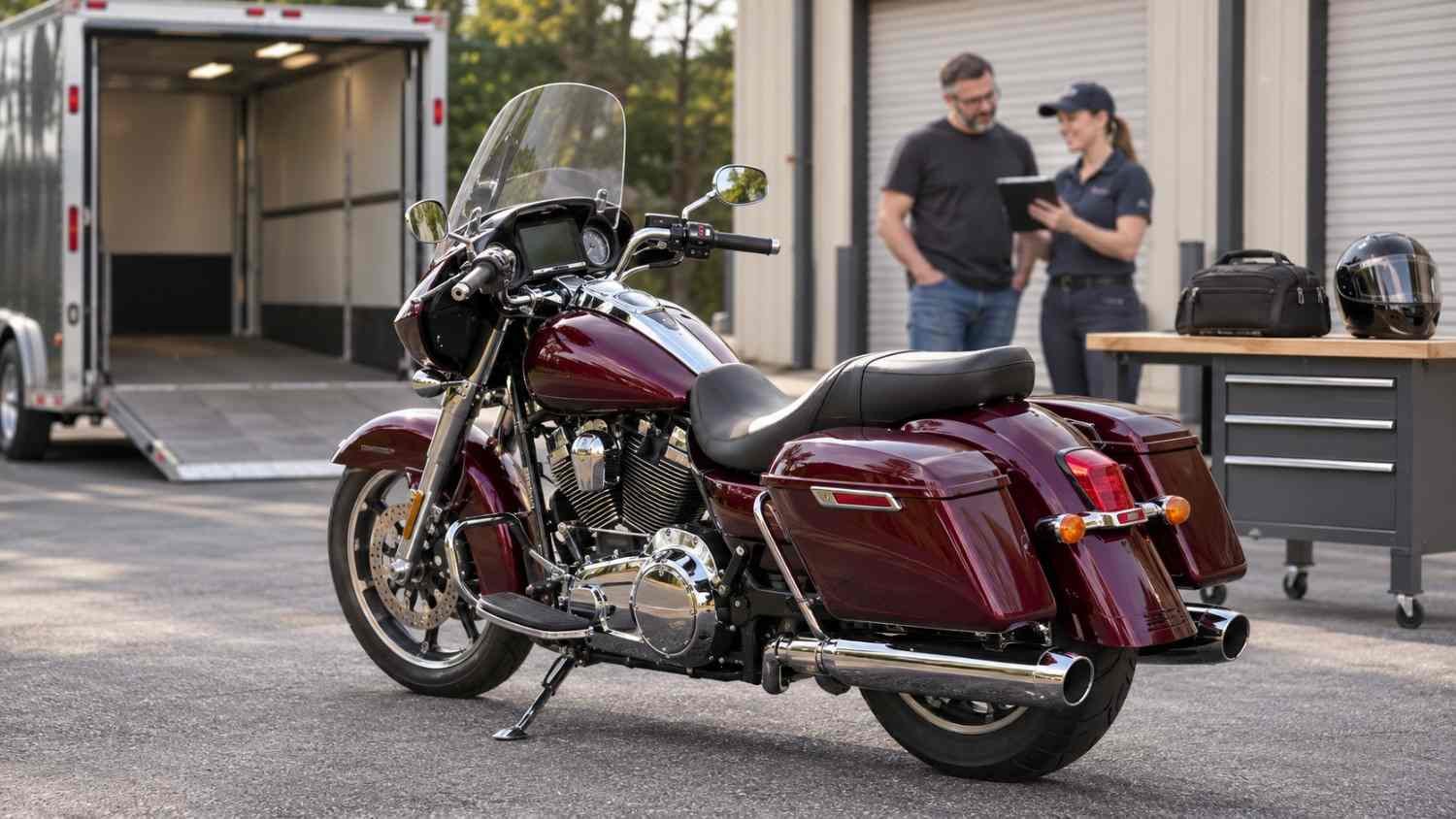
A touring motorcycle rarely travels light. It may have hard saddlebags, a top case, a tall windshield, a phone mount, and a few additions that make long rides more comfortable.
Those details matter when you arrange transport. A quote based on a standard motorcycle may not account for wider luggage, custom handlebars, or a box of spare parts you want to send with it.
Shipping a motorcycle with saddlebags starts with telling the transporter what is attached, what is removable, and what you intend to include. Some installed equipment may stay in place once approved. Personal belongings and loose items need separate attention.
Before removing parts or packing the bags, send the transport company clear photos and ask for instructions specific to your bike.
Can Saddlebags Stay on a Motorcycle During Shipping?
There is no single answer for every motorcycle and carrier.
Factory hard cases, quick-release luggage, and soft throw-over bags have different mounting systems. Their condition, dimensions, and attachment points can affect how the motorcycle is handled.
Explain which type your bike has. Tell the transporter whether the bags lock into their mounts, whether any attachment is damaged, and whether the luggage extends beyond the motorcycle’s usual width.
Do not assume that a case suitable for highway riding is automatically approved for transport. Equally, do not start dismantling a firmly installed system without asking whether removal is necessary.
Get the agreed arrangement recorded in your booking notes so the pickup driver receives the same information.
Empty the Bags Before Pickup
A saddlebag can remain attached and still need to be emptied.
Check every compartment for wallets, documents, electronics, tools, clothing, and riding gear. Small items often disappear into side pockets and remain there long after a ride.
NG Auto Haulers’ published terms require personal items to be removed before pickup. A locked compartment does not change that requirement. Review the transport terms and conditions before preparing your shipment.
Keep important paperwork and valuables with you. If you have a question about an item that came with the motorcycle, describe it to the coordinator rather than leaving it inside without mentioning it.
What About Soft Bags and Detachable Luggage?
Make a separate list of anything that comes off without tools or is held in place by straps.
This may include:
- Tank bags.
- Tail bags and seat-mounted luggage.
- Soft saddlebags.
- Removable top cases.
- Handlebar bags.
- Clip-on storage pouches.
Ask which items must be removed and whether any detached equipment can be accepted separately. Do not leave a bag hanging from the bike because it appears tightly fastened.
If the carrier approves separate items, confirm their packaging, dimensions, charges, and documentation before pickup. Approval to move the motorcycle does not automatically include loose luggage.
For anything the carrier will not accept, arrange another way to send it.

Discuss Windshields, Mirrors, and Phone Mounts
Accessories do not have to be large to deserve attention.
A removable GPS unit, phone holder, action camera, or charging accessory should be discussed before collection. Explain whether the item is permanently wired, mounted on a quick-release bracket, or simply clipped into place.
Windshields and mirrors need a more careful conversation. Removing them may change the motorcycle’s dimensions, but unnecessary disassembly can create its own problems.
A useful starting point is to send the transporter:
- A full side view of the motorcycle.
- A front view showing its widest points.
- Close-up photos of unusual or detachable fittings.
Mention loose hardware, cracked mounts, or components that move unexpectedly. Follow the agreed preparation instructions, and use a qualified technician if removal requires work you are not comfortable doing.
Tell the Transporter About Custom Parts Before Getting a Quote
The motorcycle’s model name may not describe the bike as it sits today.
Extended saddlebags, wide handlebars, a tall touring screen, a sidecar, or other modifications can change the space and equipment required. Lowered suspension may also be relevant to loading.
Provide measurements when requested, and make clear whether those measurements include the accessories that will remain installed.
For example, a stock cruiser and the same model fitted with extended bags should not be presented as identical shipments without further details.
Our motorcycle shipping cost guide explains the broader information used to assess a route. For an accessory-heavy bike, photos can help the coordinator identify questions that a basic make-and-model description might miss.
Can You Send a Helmet, Spare Seat, or Extra Exhaust?
Ask before including any of them.
A seller may offer a spare seat or original exhaust with the motorcycle. You may also want your helmet and riding jacket waiting at the destination. Those items still need their own transport arrangements.
Tell the company exactly what you have, how it is packed, and its approximate size and weight. Ask whether it can be accepted, what it will cost, and how receipt and delivery will be recorded.
Do not attach a helmet to the handlebars or tie a box to the passenger seat as a last-minute solution.
If extra items are approved, request a written item list. If they are not approved, have the seller hold them or arrange separate shipping before the motorcycle is collected.
Enclosed Transport Does Not Change the Packing Rules
An enclosed trailer may be your preferred choice for a motorcycle with a special finish or valuable installed accessories.
It does not automatically mean that loose belongings, spare parts, or unapproved luggage can travel inside with the bike.
Ask the same questions regardless of the transport method: what can remain attached, what must be removed, and what additional items are accepted?
You can discuss enclosed bike transport while arranging your quote. Confirm the accessory requirements for the actual carrier assigned to the shipment.
Photograph Accessories as Carefully as the Motorcycle
Take enough photographs to show what was present and its condition before loading.
Start with full views of both sides, the front, and the rear. Then photograph the saddlebags, case lids, windshield, mirrors, and any custom fittings.
For existing damage, take a wider photo showing its location and a close-up showing the mark itself. Keep the original files.
Documenting the motorcycle before transport is a standard preparation step, and uShip’s guidance specifically recommends photographs from several angles with detailed images of existing damage.
At pickup, compare your notes with the inspection record. Point out anything missing or described incorrectly before signing, and keep a copy.
Confirm Which Keys the Driver Needs
Your motorcycle may have separate keys for the ignition, steering lock, saddlebags, and top case.
Ask which keys are required for transport. Explain any unusual locks, alarms, or operating procedures before pickup.
Keep a spare set when available. Avoid leaving extra keys loose inside a compartment, and do not lock the motorcycle in a way that conflicts with the carrier’s handling instructions.
If a dealership, private seller, or friend is handing over the bike, send that person the final preparation instructions too. They should know which accessories are approved and which items must stay behind.
Check the Accessories Again at Delivery
Allow time to inspect the motorcycle before completing the handover.
Compare it with the pickup photos and condition record. Look over the bag lids, mounting areas, windshield, mirrors, and other exposed fittings. Check that any separately approved items have arrived.
If something appears different, photograph it and follow the carrier’s procedure for noting the concern on the delivery documents and reporting it promptly.
Keep the booking agreement, inspection records, and photographs together so you do not have to reconstruct the arrangements later.
Questions to Settle Before Booking
Before confirming motorcycle transport, make sure you know:
- Which saddlebags and accessories can remain attached.
- Which compartments must be emptied.
- Whether detachable equipment must be removed.
- Whether extra parts are accepted and at what cost.
- Which dimensions and photographs the company needs.
- How approved accessories and additional items will be documented.
- Which keys and operating instructions must accompany the bike.
Ask how the transport agreement and applicable coverage address installed accessories and separately accepted items. Do not assume that every item is treated the same.
Get a Quote That Reflects Your Actual Motorcycle
The best description is the bike you are shipping—not just the standard model shown in a catalog.
Tell NG Auto Haulers LLC about your saddlebags, windshield, custom parts, and anything else that could affect the arrangements. Have your pickup and delivery ZIP codes, preferred dates, and clear motorcycle photos ready
For the rest of the checklist, read our guide to preparing your motorcycle for shipping.
Request a motorcycle shipping quote or call +1 (872) 282-9951 to discuss your bike and its accessories before pickup is scheduled.