
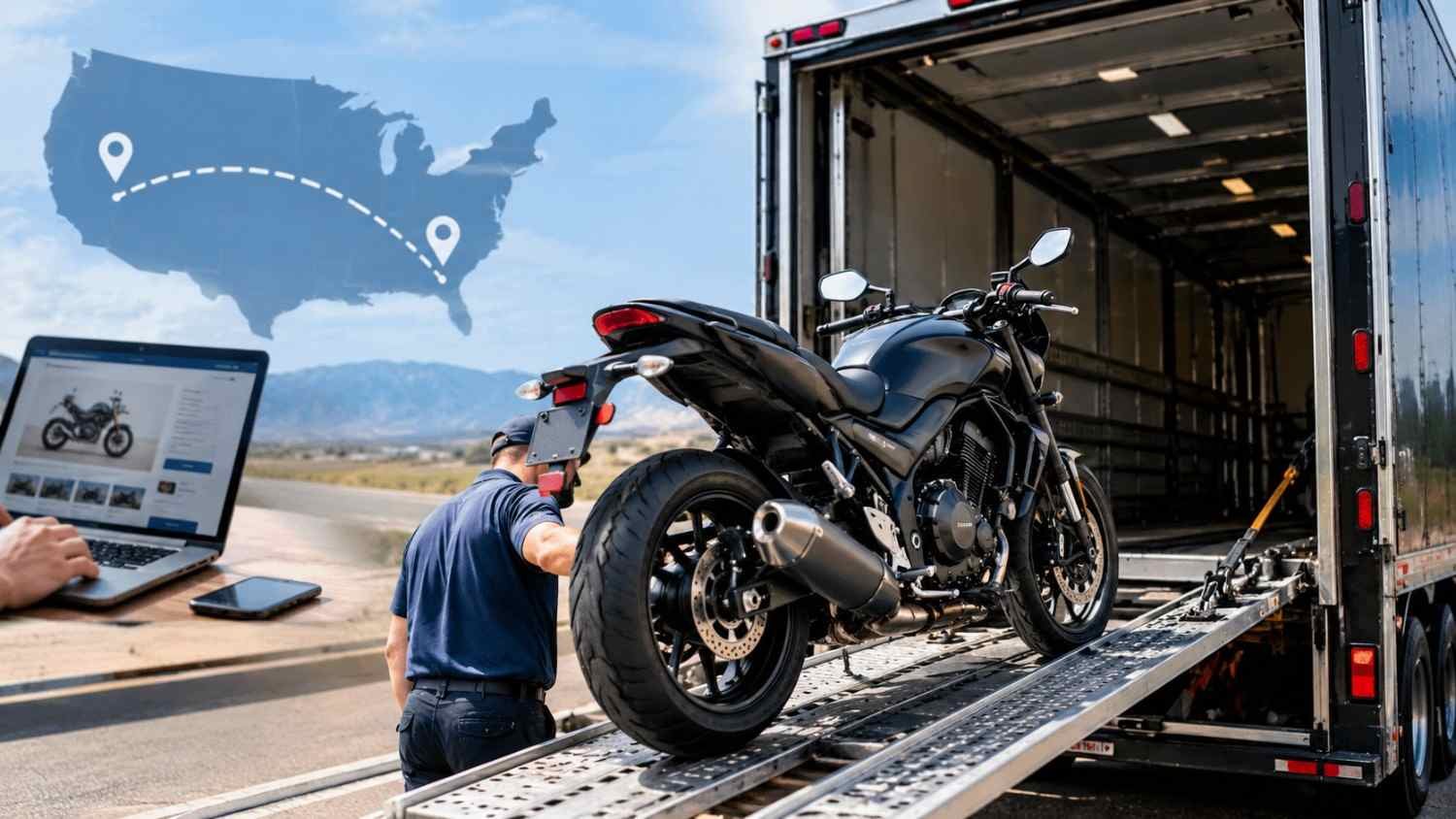
Finding the right motorcycle can take time. You might spend weeks comparing listings, talking to sellers, and checking photos before finding the bike you want. Then you discover it is in another state, perhaps hundreds or even thousands of miles from your home.
At that point, you have another decision to make: how will you get it home?
Some buyers arrange a road trip to collect their motorcycle. Others cannot take several days off work, do not have a suitable vehicle for hauling a bike, or simply do not want to ride an unfamiliar motorcycle over a long distance. Having it transported is another option, particularly when the purchase is from a private seller or an out-of-state dealership.
A few details are worth sorting out before you arrange pickup.
Before Booking, Make Sure the Motorcycle Is Ready to Leave
The first conversation should be with the seller, not the transport company.
Ask about the motorcycle’s current condition. Does it start? Has it been sitting unused? Are the tires holding air? Does it roll and steer normally? These may seem like basic questions, but the answers can affect how the bike is loaded.
A motorcycle that starts and runs normally may be straightforward to collect. One with a dead battery, a flat tire, or a mechanical issue may need special loading equipment. Do not assume that a bike advertised as a restoration project or a non-running motorcycle can be handled in exactly the same way as a working one.
It also helps to agree on what comes with the purchase. If the seller is including saddlebags, a spare seat, a windshield, or other loose parts, ask how those items should be handled. The transport company may have restrictions on loose accessories or personal belongings.
Getting these details settled early makes the pickup arrangement much clearer.
Buying From a Private Seller Is Different From Buying From a Dealer
With a dealership, there may be a sales representative who can coordinate the release of the motorcycle and explain the paperwork requirements. Some dealerships have experience working with transport companies; others may need you to arrange an appointment.
A private seller usually has a different schedule. They may be available only in the evenings or on weekends, and they might not be comfortable leaving the motorcycle with a driver without knowing when collection will happen.
Confirm a realistic pickup window with the seller before booking. Make sure they understand that the carrier may not arrive at an exact hour unless that timing has been specifically agreed upon.
Also, finish the purchase arrangements and confirm that the required documents are ready before the motorcycle is collected. Transporting the bike does not replace the separate steps involved in transferring ownership or registering it in your state.
Give the Transport Company the Right Details
When requesting a quote, provide the motorcycle’s make, model, and year, along with the pickup and delivery ZIP codes. Explain whether it runs and rolls, and mention anything unusual about its size or condition.
For example, a touring motorcycle with large side cases may need different space considerations from a smaller street bike. A custom motorcycle with extended handlebars or other modifications may need extra attention during loading.
Photographs can help, too. Ask the seller to send recent pictures of the motorcycle from both sides and close-ups of any existing damage. These images give you a useful reference before the carrier takes possession of the bike.
Be accurate about the pickup address. If the seller lives on a narrow residential street or inside a gated community, mention that in advance. A large transport vehicle may need to meet the seller at a nearby location with better access.
Open Transport or Enclosed Motorcycle Shipping?
This is one decision worth making according to the motorcycle you have bought, rather than choosing an option simply because it sounds better.
Open transport may suit an everyday motorcycle that is in good condition and does not require additional weather shielding. The bike travels on an open transport setup and is exposed to outdoor conditions during the journey.
Enclosed transport places the motorcycle inside a covered trailer. Buyers of classic bikes, collectible models, expensive custom builds, or freshly restored motorcycles may prefer this arrangement because it reduces direct exposure to weather and road debris.
Neither option removes every transport risk, and availability can depend on your route and preferred dates.
If the motorcycle has special value to you, review the details of enclosed motorcycle transport and ask the provider whether the service is suitable for your particular bike.
What Happens on Pickup Day?
Once the collection date is approaching, stay in touch with the seller and transport provider. Both sides should know the agreed location, the expected pickup window, and whom to contact if something changes.
The seller should make the motorcycle accessible and have the keys ready. If there are specific starting, steering, or loading issues, those should already have been discussed.
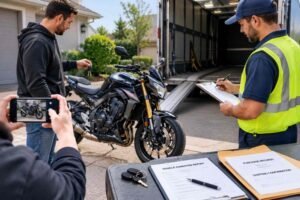
Before the motorcycle leaves, its visible condition should be recorded. Photographs of the tank, fairings, wheels, mirrors, exhaust, and other exposed parts can help document existing scratches or marks.
Keep copies of the purchase records and shipping confirmation. If the carrier provides a condition report or other transport paperwork, read it and retain a copy for your records.
For a bike that does not run, make sure the transport provider knows this before dispatching a carrier. Do not leave an important mechanical issue for the driver to discover at the pickup address.
How Long Will It Take to Get Your Bike?
The distance between the seller and your home is only one part of the schedule.
A carrier’s route, other scheduled pickups, road conditions, and the seller’s availability can all affect the expected timing. There may also be a wait between booking the shipment and the day the motorcycle is collected.
If you need the bike for a particular weekend or event, leave some flexibility. Avoid assuming it will arrive on a particular day until you have discussed the expected delivery window with the provider.
Our guide on how long motorcycle shipping takes in the USA explains the factors that can affect a motorcycle’s delivery schedule.
Check the Motorcycle Before Accepting Delivery
When the motorcycle arrives, take a few minutes to look it over before completing the handover.
Compare its appearance with the photos taken before pickup. Check the tank, bodywork, mirrors, controls, wheels, and other visible parts. If you notice a mark that was not present earlier, take clear photos and follow the carrier’s procedure for documenting and reporting the concern.
Do not rely only on a quick glance from a distance. Good lighting makes it easier to notice small marks, especially on dark paint or polished surfaces.
If the bike has an apparent mechanical problem, do not assume that it is safe to ride. Arrange an appropriate inspection when necessary, and keep your shipping paperwork in case you need to discuss the issue with the transport provider.
Choosing a Transport Provider
The cheapest quote is not necessarily the most suitable one. Pay attention to what the service includes, how pickup and delivery are arranged, and how the company communicates if the schedule changes.
Ask whether the company is the carrier that will move your motorcycle or a broker arranging transportation through another carrier. For interstate vehicle transport, you can use the Federal Motor Carrier Safety Administration’s consumer guidance for automobile transporters to learn more about checking registration and understanding the difference between a carrier and a broker.
Read the booking terms before paying, and make sure any special requirements for your motorcycle have been discussed.
Bringing Your New Motorcycle Home
You do not have to travel across the country just because the motorcycle you want is located far away. Once the purchase and paperwork are in order, transport can be arranged around the seller’s availability, your location, and the bike’s condition.
The most useful preparation is often quite simple: confirm that the motorcycle is ready for collection, share accurate details, agree on the pickup arrangements, and leave enough room in your schedule for the journey.
If you are planning to purchase a bike from another state, you can explore door-to-door motorcycle shipping to review a transport option that may fit your needs.
Buying a motorcycle from a distant seller should be an exciting step, not a logistics problem. Getting the collection and delivery details settled before the seller hands over the keys can make the entire process easier to manage.