
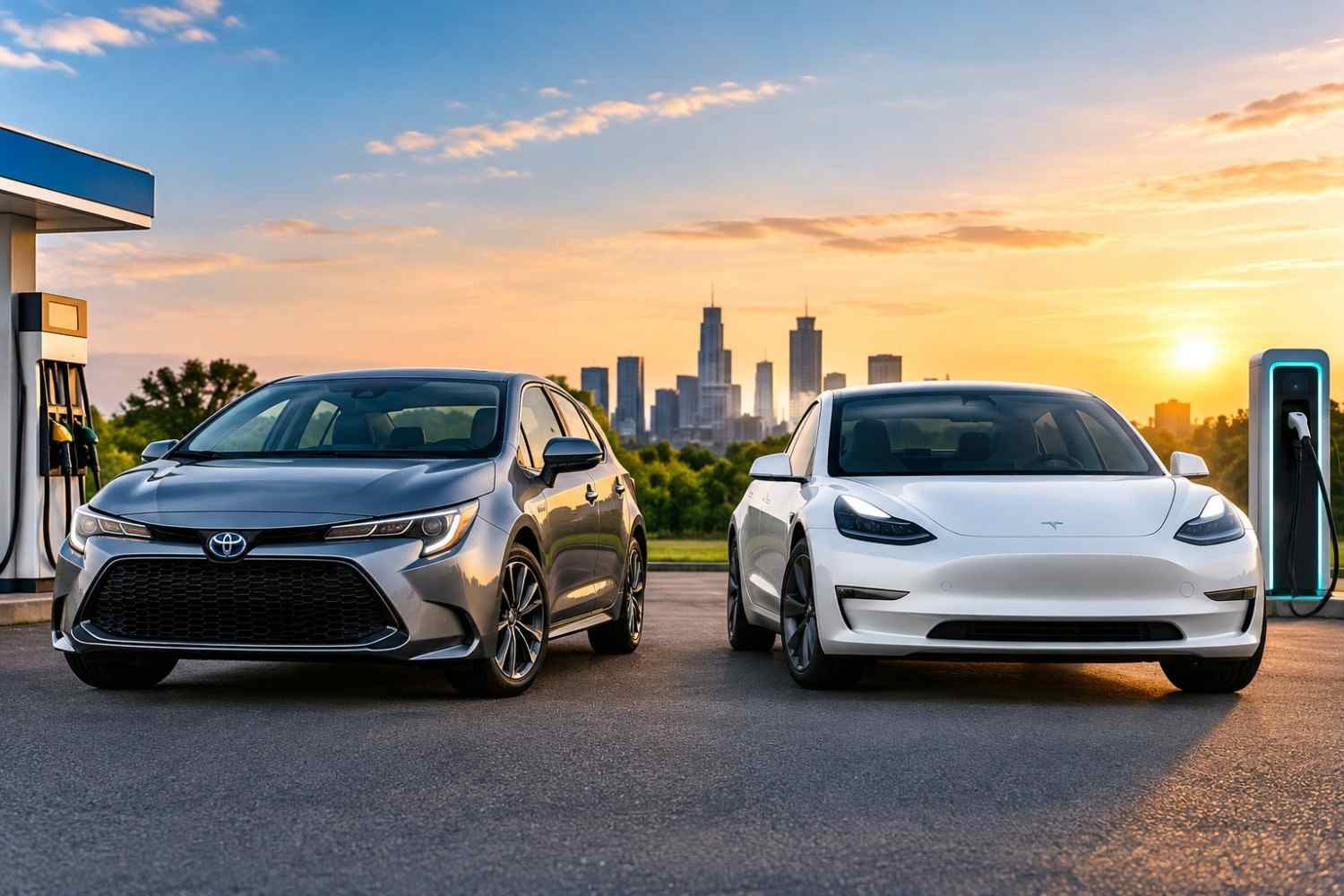
Choosing between a hybrid and an electric car is not just about how a vehicle gets its power. For drivers in the United States, the decision also comes down to purchase price, fuel costs, charging access, driving habits, and how long they plan to keep the car.
Both options can reduce gasoline use, but they work in different ways. A hybrid combines a gasoline engine with an electric motor, while a fully electric vehicle runs on electricity stored in a rechargeable battery.
So, which one makes more sense in 2026? The answer depends on where you drive, how far you travel, and whether charging at home is an option.
What Is the Difference Between a Hybrid and an Electric Car?
A traditional hybrid car uses both a gasoline engine and an electric motor. Its battery generally recharges through the engine and regenerative braking, so you do not need to plug it into a charger. You can refuel it at a regular gas station.
A fully electric vehicle, also called a battery electric vehicle or EV, uses an electric motor instead of a gasoline engine. You recharge its battery at home, at work, or at a public charging station.
There is also a third option: the plug-in hybrid electric vehicle, or PHEV. It can travel a certain distance on electricity before using gasoline when the battery’s available charge runs low.
The National Highway Traffic Safety Administration explains the differences between electric and hybrid vehicles, including how their power systems work.
1. Purchase Price: Which Car Costs Less?
The purchase price depends on the specific model, trim level, battery size, and available equipment. Neither hybrids nor electric cars are automatically cheaper in every vehicle category.
A traditional hybrid may appeal to buyers who want better fuel economy without paying for a home charging setup. Many hybrid models are available as sedans, compact cars, and family SUVs.
Electric vehicles have a wider range of prices, from more affordable models to premium cars and SUVs. However, an EV buyer should consider the complete cost of ownership rather than looking at the sticker price alone.
Before buying, compare similar vehicles and include insurance, registration, charging or fuel, maintenance, and expected depreciation in your budget.
For drivers considering an EV, check whether installing a home charger would require additional electrical work. That expense may influence the overall value of the purchase.
2. Fuel and Charging Costs
Running costs are one of the biggest reasons people compare hybrid vs. electric cars.
A hybrid uses less gasoline than many comparable conventional vehicles, although actual fuel economy varies by model and driving conditions. It still needs gasoline, and frequent long-distance driving can add up over time.
An electric vehicle uses electricity instead of gasoline. Home charging can be economical, especially when your electricity rate is favorable. Public fast charging may cost more, depending on the charging network, location, and pricing plan.
Your savings will depend on local electricity rates, gas prices, how many miles you drive, and how efficiently the vehicle uses energy.
For example, someone who drives a high annual mileage may benefit more from lower energy costs than a person who only drives occasionally. However, that advantage needs to be weighed against the purchase price and insurance costs.
The U.S. government’s FuelEconomy.gov website is a useful place to compare fuel economy and estimated energy costs for specific models.
3. Charging Access: A Major Difference
A traditional hybrid is easier to fit into a routine that does not include charging. You fill up at a gas station and continue driving without planning charging stops.
An electric car requires access to charging. For homeowners with a suitable parking space, charging overnight can be convenient. You may begin many mornings with enough battery charge for your daily commute.
Apartment residents and people who park on the street may need to depend on public charging. Before buying an EV, check the stations near your home, workplace, shopping areas, and regular travel routes.
It is also worth checking connector compatibility, charging speed, station availability, and pricing. A charger appearing on a map does not always mean it will be available when you need it.
If home charging is difficult or public stations are inconvenient, a regular hybrid may be the more practical choice.
4. Driving Range and Long Road Trips
Hybrid vehicles offer a familiar advantage on long trips: when the gasoline tank is low, you can usually refuel at a conventional gas station. You do not need to plan the trip around charging stops.
Electric vehicles can also work well for road trips, particularly when the route has reliable fast chargers. Many current EVs offer substantial driving range, but the exact distance varies by model.
Real-world range can change with highway speed, outside temperature, climate-control use, terrain, and driving style. Cold weather, in particular, can affect battery performance and the energy needed to heat the cabin.
For a long journey, EV owners should check charging locations and allow time for recharging. Drivers who regularly travel through remote areas may find a hybrid more convenient because gasoline infrastructure is familiar and widely available.
The best choice depends on your most common trips, not just the range number advertised for a vehicle.

5. Maintenance and Long-Term Ownership
Both vehicle types need routine care, but their maintenance requirements are different.
A hybrid still has a gasoline engine, so it generally needs engine oil changes and other engine-related service. Its electric motor and regenerative braking can help improve efficiency, and brake wear may be reduced in some driving conditions.
A fully electric vehicle has fewer moving parts in its powertrain and does not need engine oil changes. It still requires tire care, brake inspections, cabin air-filter replacement, and any other service specified by the manufacturer.
Battery condition also matters when buying a used electric car. Ask about the remaining battery warranty, available battery-health information, and the vehicle’s charging history where that information is available.
According to the U.S. Department of Energy’s Alternative Fuels Data Center, all-electric vehicles generally require less scheduled maintenance than hybrids and conventional vehicles. Actual ownership costs still depend on the model, usage, and repair needs.
6. Which Option Is Better for Your Lifestyle?
The right car depends on how you use it every week.
A hybrid may be better if you:
- Drive long distances often and want to refuel quickly.
- Live in an apartment without convenient charging.
- Want to reduce gasoline consumption without changing your routine.
- Frequently travel through areas where charging options are limited.
An electric car may be better if you:
- Can charge at home or another reliable location.
- Mostly commute, run errands, or make predictable daily trips.
- Want to avoid buying gasoline.
- Prefer a vehicle with fewer routine powertrain maintenance needs.
A plug-in hybrid can be a middle-ground option. It may allow you to complete many short daily trips using electricity while retaining a gasoline engine for longer journeys. To make the most of its electric capability, you need to charge it regularly.
7. What Should Buyers Know About Incentives in 2026?
Do not assume that a federal tax credit will reduce the purchase price of a new or used electric vehicle in 2026.
The IRS states that federal clean vehicle purchase credits are not available for vehicles acquired after September 30, 2025. Buyers should check the current rules before including any incentive in their budget.
Some state, local, or utility programs may have separate requirements or benefits. Availability varies by location and can change, so review the U.S. Department of Energy’s state and federal incentives information before making a decision.
Compare the vehicle’s actual price and expected running costs even when no incentive is available.
Hybrid vs. Electric Cars: Quick Comparison
| Feature | Hybrid Car | Fully Electric Car |
|---|---|---|
| Main energy source | Gasoline and electricity | Electricity |
| Needs gasoline | Yes | No |
| Requires external charging | No, for a regular hybrid | Yes |
| Home charger required | No | Helpful, but not essential |
| Engine oil changes | Yes | No |
| Long-distance planning | Usually straightforward | Charging stops may be needed |
| Best fit | Drivers who want fuel savings with familiar refueling | Drivers with convenient charging and predictable travel |
Frequently Asked Questions
Is a hybrid better than an electric car in 2026?
A hybrid may suit drivers who cannot charge at home or take frequent long-distance trips. An electric car may be a better fit for drivers with dependable charging access who want to avoid gasoline. Your driving pattern and total ownership costs matter more than the technology alone.
Are electric cars cheaper to maintain than hybrids?
Electric cars generally need less routine maintenance because they have fewer moving parts and no gasoline engine oil changes. However, tires, battery systems, repairs, and other vehicle-specific costs still need to be considered.
Do hybrid cars need to be plugged in?
Traditional hybrids do not need to be plugged in. They use gasoline and recover energy through systems such as regenerative braking. Plug-in hybrids are different because they can recharge from an external power source.
Which is better for long-distance driving?
A hybrid can be convenient because it can refuel at regular gas stations. An electric car can also handle long-distance journeys when suitable charging stations are available along the route. Consider your usual destinations before choosing.
Final Verdict: Hybrid or Electric?
In 2026, there is no single winner for every American driver. A hybrid provides fuel savings while preserving the convenience of gasoline refueling. A fully electric vehicle can offer lower routine maintenance and convenient home charging, provided its range and charging access fit your needs.
Before buying, compare specific models, calculate your estimated annual driving costs, and think about how you travel during an ordinary week.
If your decision involves relocating to another state with your vehicle, explore vehicle transport services or learn more about cross-country car shipping from NG Auto Haulers LLC.
The smartest choice is the vehicle that fits your budget, driving routine, and access to charging or fuel without making daily life more complicated.