
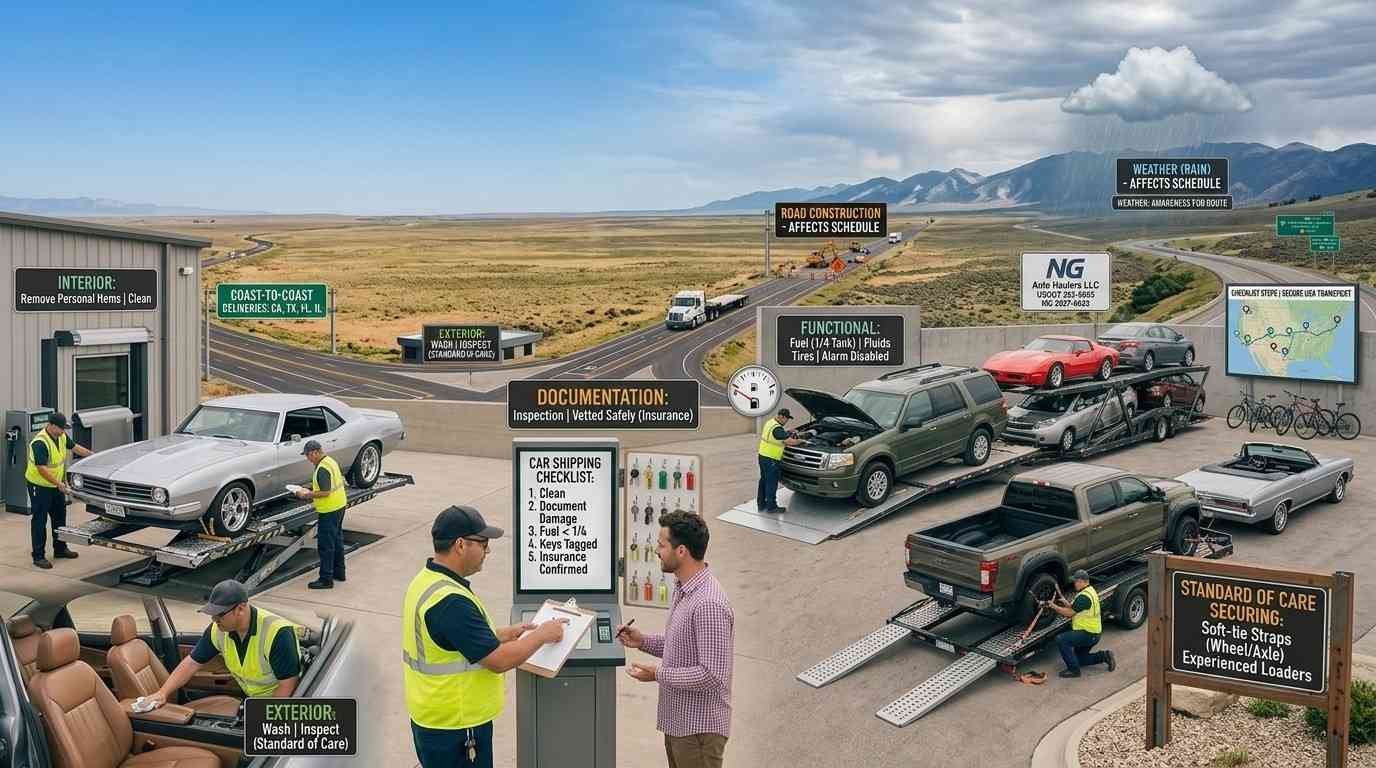
Shipping a car is much easier when the vehicle is ready before the carrier arrives. A little preparation can prevent delays, make the pickup inspection easier, and help both you and the transport company avoid confusion during the trip.
Whether you are moving across the country, buying a vehicle from another state, heading south for the winter, or sending a car to a family member, the basic preparation steps are mostly the same.
This checklist explains how to prepare your car for shipping in the USA, from removing personal belongings to checking the battery, documenting the vehicle, and getting the paperwork ready.
1. Wash Your Car Before Pickup
Start with a basic exterior wash before the carrier arrives.
A clean vehicle makes it easier to see existing scratches, dents, paint chips, or other marks during the pickup inspection. You do not need a professional detail. A normal wash is enough to give you a clear view of the body.
Pay particular attention to the bumpers, doors, mirrors, wheels, and lower panels because these areas can be difficult to inspect when the vehicle is covered in dirt.
Cleaning the car also makes it easier for you to compare its condition at delivery.
2. Take Photos of the Vehicle
Before handing over the keys, take clear photos of the car from several angles.
Take pictures of:
- Front and rear
- Both sides
- Wheels and bumpers
- Windshield and windows
- Roof, when practical
- Interior
- Dashboard and odometer
- Any existing scratches, dents, or chips
Take close-up photos of existing damage as well as wider shots that show where the damage is located.
At pickup, the vehicle’s condition should also be recorded on the transport paperwork. Keep your photos until the car has been delivered and checked again.
The bill of lading is an important record during vehicle transportation, so read the condition notes carefully before signing.
3. Remove Personal Belongings
One of the most common mistakes people make is treating the vehicle like a moving box.
Remove clothing, electronics, important documents, tools, valuables, loose accessories, and anything else you do not need during transport.
Personal belongings can move around inside the vehicle while it is being transported. They may also create problems if something is lost or damaged.
For a simple and safer shipment, leave the passenger area and trunk as clear as possible unless your transport company has specifically confirmed that certain items are allowed.
4. Leave Only a Small Amount of Fuel
Your vehicle needs enough fuel to start, load, unload, and move when necessary, but there is usually no reason to ship it with a full tank.
A lower fuel level also means less unnecessary weight during transport.
Ask your auto transport company about its exact fuel requirement before pickup, because policies can vary by carrier and shipment.
5. Check for Leaks
Take a few minutes to check underneath the car for obvious fluid leaks.
Look for signs of:
- Engine oil
- Coolant
- Transmission fluid
- Brake fluid
- Other leaking fluids
A leaking vehicle can create problems during loading and transportation, particularly when other vehicles are being carried on the same trailer.
If you already know your car has a mechanical issue or fluid leak, tell the transport company before pickup instead of waiting until the driver arrives.
6. Check the Battery
Make sure the battery is secure and the vehicle can start normally.
A weak battery can become a problem when a carrier needs to move the vehicle during loading or unloading. Check the battery terminals and make sure everything is properly secured.
If your car has an aftermarket alarm system or another accessory that could drain the battery, let the carrier know ahead of time.
7. Check Your Tires
Your tires should be properly inflated before the vehicle is picked up.
Do not rely only on how the tires look. Check the pressure against the manufacturer’s recommended range, which is normally listed on the driver’s-side door label or in the owner’s manual.
Also check for obvious tire damage. A carrier may need to move the vehicle several times during loading and delivery, so properly inflated tires make handling easier.

8. Fold or Remove Loose Exterior Accessories
Take a look around the outside of the vehicle for anything that could become loose or interfere with loading.
Depending on the vehicle, this may include:
- Removable roof racks
- Bike racks
- Large antennas
- Cargo carriers
- Custom exterior attachments
- Loose trim pieces
If something cannot be removed, tell the transport company when you arrange the shipment.
This is especially important for vehicles with low ground clearance, wide body kits, oversized tires, or other modifications. The carrier needs to know about these details before the trip so the right equipment and loading method can be considered.
For more information about different vehicle transport options, you can also review our vehicle transport services.
9. Make Sure the Car Is Ready to Drive
Tell the carrier the truth about the vehicle’s condition.
If the car starts, steers, rolls, and brakes normally, let the company know it is operational.
If the vehicle does not run, has a dead battery, cannot roll, or has another major mechanical problem, mention it when booking.
An inoperable vehicle may require additional equipment or special handling. Keeping this information accurate from the beginning can help prevent pickup-day surprises.
10. Disable or Secure Special Features
Check anything that could become activated during transport.
This can include aftermarket alarms, security systems, convertible tops, detachable accessories, and other equipment that requires special handling.
You should also make sure windows are fully closed and the vehicle is locked when the driver is finished with the inspection.
11. Keep the Important Documents Ready
Have the information you may need for the shipment available before pickup.
Depending on the carrier and your situation, this can include your driver’s license or other identification, registration information, shipment details, and contact information for the pickup and delivery locations.
Your transport company can tell you exactly what documents are required for your shipment.
If you are unsure how the process works from booking through delivery, our how car shipping works guide explains the main steps.
12. Give the Driver the Correct Keys
Provide the key or keys needed to move the vehicle, but keep your spare key with you whenever possible.
If there are special instructions for the vehicle, explain them before the driver leaves. This is particularly helpful for cars with unusual ignition systems, push-button controls, manual transmissions, or aftermarket modifications.
A small note with basic instructions can also help when someone else is handling pickup or delivery on your behalf.
13. Prepare for the Pickup Inspection
The pickup inspection is an important part of the shipping process.
Walk around the vehicle with the driver and compare the actual condition of the car with the notes on the bill of lading. Make sure existing damage is described correctly.
Do not rush through this part.
If you see a scratch, dent, chip, or other damage that has not been recorded, point it out before signing.
Keep a copy of the completed paperwork and your photos for your records.
14. Check the Car Again at Delivery
Your preparation does not end when the carrier arrives at the destination.
Walk around the vehicle again and compare its condition with the pickup documentation and the photos you took before transport.
Check the same areas you photographed earlier, including the bumpers, doors, wheels, windows, roof, and interior.
If something appears different, document it and make sure the condition is addressed in the delivery paperwork before you complete the handoff.
Car Shipping Preparation Checklist
Before the carrier arrives, use this quick checklist:
☐ Wash the exterior
☐ Photograph the car from all sides
☐ Record existing damage
☐ Remove personal belongings
☐ Leave the recommended amount of fuel
☐ Check for fluid leaks
☐ Check the battery
☐ Check tire pressure
☐ Remove loose exterior accessories
☐ Disclose mechanical problems
☐ Secure windows and special features
☐ Prepare required documents
☐ Keep the necessary keys ready
☐ Review the pickup inspection report
☐ Inspect the vehicle again at delivery
Does Your Car Need Special Preparation?
Not every vehicle can be prepared the same way.
A standard sedan usually needs only basic preparation, while a classic car, luxury vehicle, modified vehicle, or inoperable car may require additional planning.
For higher-value vehicles, enclosed transportation may be worth considering because the vehicle is protected inside an enclosed trailer rather than being exposed to normal road conditions. You can learn more about this option through our enclosed car transport service.
For long-distance moves, our cross-country car shipping service is another option to consider.
Final Thoughts
Preparing your car for shipping in the USA does not have to be complicated. The main goal is to hand over a clean, documented, mechanically ready vehicle with personal belongings removed and any special conditions clearly explained.
Taking photos, checking the tires and battery, removing loose items, and carefully reviewing the pickup paperwork can make the entire process easier.
If you are planning to move your car from one state to another, you can also learn more about our state-to-state car shipping service.
Ready to arrange transportation for your vehicle? Get a free car shipping quote from NG Auto Haulers LLC and discuss your pickup and delivery needs before booking.