
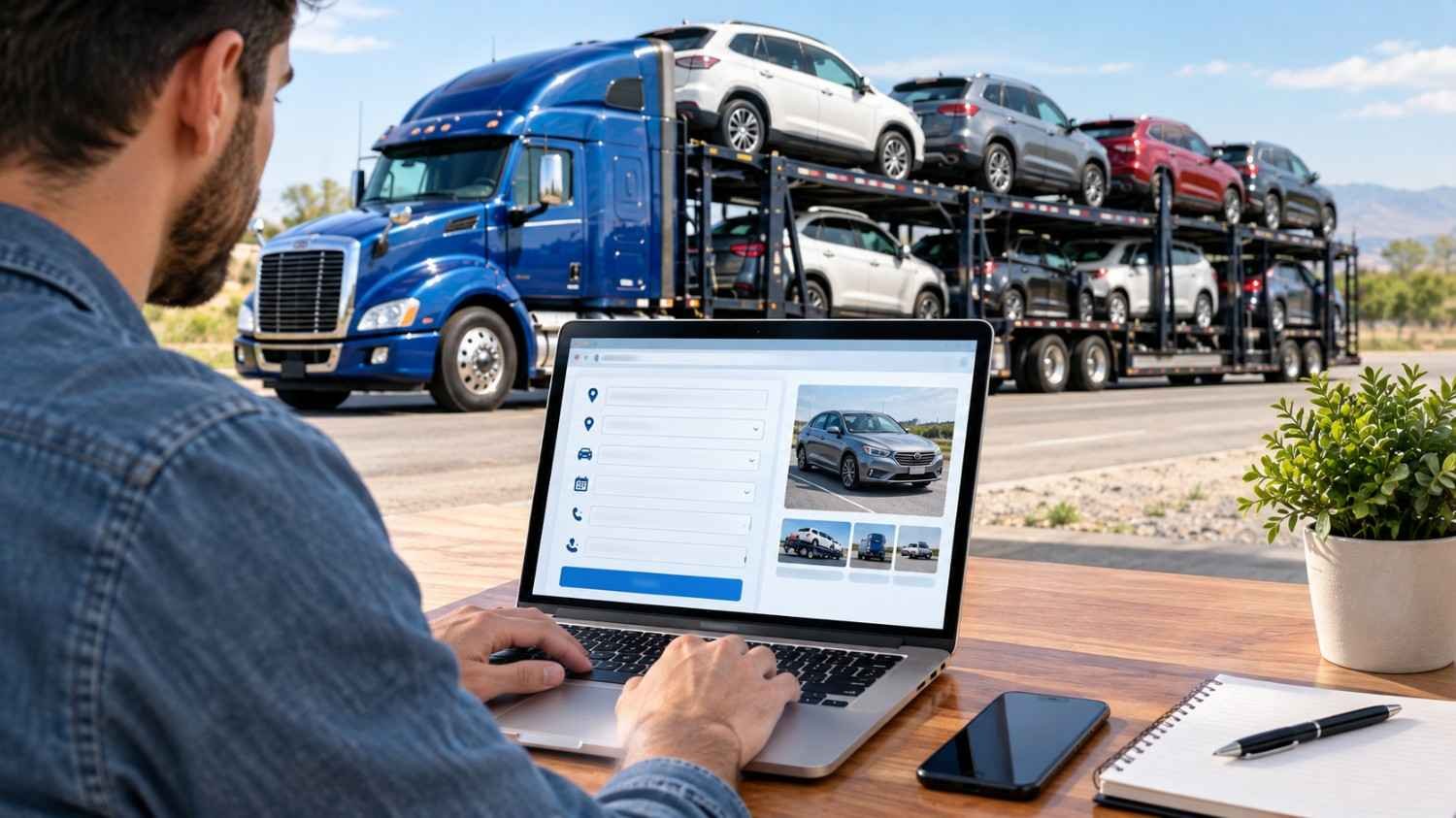
Suppose you have found a car you want to buy in another state, or you are moving across the country and cannot take your vehicle with you. You contact a car shipping company, fill out a quote form, and wait for a price.
But what happens if the company needs more information before it can give you an accurate quote?
This is fairly common. The cost and arrangements for shipping a small sedan from a dealership are not necessarily the same as those for moving a large SUV that does not run. The more details you can provide at the beginning, the easier it is for the transport company to understand your request.
Before you ask for a car shipping quote in the USA, there are a few things worth having ready.
Where Is the Car Going?
The first question is usually the simplest: where is the car now, and where does it need to go?
You might be shipping a vehicle from Houston to Miami, moving from Chicago to Phoenix, or arranging delivery for a car purchased from someone in another state. Whatever the route, have the pickup and delivery ZIP codes available.
Try to provide the actual vehicle location rather than a general city name when possible. A car parked at a dealership, for example, may be collected from a different part of town than you initially expected.
Your address can also affect the pickup arrangements. Some streets are too narrow for a large carrier, and apartment complexes or gated neighborhoods may have restrictions on commercial vehicles. If access could be difficult, mention it when requesting your quote. Meeting the driver at a suitable nearby location may be more practical.
What Kind of Car Are You Shipping?
A transport company will usually ask for the car’s year, make, and model. These details help the company understand the vehicle’s size and the type of transport it may need.
A Honda Civic and a Chevrolet Tahoe take up different amounts of space. A lifted pickup or a vehicle fitted with oversized tires may need additional consideration, too.
Be honest about modifications. If the car has very low ground clearance, an aftermarket body kit, or anything that changes its usual dimensions, explain that before booking. These details can affect the loading arrangements and help avoid confusion when the carrier arrives.
If you are buying a used car from a private seller, double-check the vehicle information before submitting the form. It is easy to enter the wrong model year when you are arranging several parts of a move at once.
Does the Car Run?
This question can make a real difference to your shipping arrangements.
A car that starts, steers, and rolls normally is different from one with a dead battery, damaged wheels, or an engine problem that prevents it from moving. An inoperable vehicle may require special loading equipment, depending on its condition.
If the car has been sitting in a garage for months, ask the seller whether it still starts and moves. Do not assume it is operational just because the listing says it is in good condition.
The same applies to a vehicle damaged in an accident. Tell the transport company what you know about its condition before accepting a quote. If you have photographs, they may help the company understand the situation.
You do not need to diagnose a mechanical problem yourself. You simply need to explain what you know so the provider can decide whether it can handle the shipment.
When Do You Need the Car Picked Up?
Your preferred dates are another piece of information worth sorting out early.
Perhaps your apartment lease ends on the 30th, or a dealership has told you the vehicle will be ready next Friday. Maybe you are relocating for work and need to coordinate the car shipment with your own travel plans.
Tell the company when the car will be ready and whether you have some flexibility. A preferred pickup date is useful, but it should not automatically be treated as a confirmed appointment.
Also, keep pickup and delivery separate in your planning. The day a carrier collects your car is not necessarily the day it will arrive. Route distance, carrier schedules, road conditions, and other pickups can affect the overall timing.
If you have a fixed deadline, explain it before booking and ask what delivery window is realistic for your route.

Do You Want Open or Enclosed Transport?
You may be asked which type of carrier you prefer.
Open transport is commonly used for everyday cars. The vehicle travels on an open carrier and remains exposed to outdoor conditions during the journey. For many standard vehicles, this is a practical option to consider.
Enclosed transport carries the vehicle inside a covered trailer. Owners of classic cars, collectibles, luxury vehicles, or cars with delicate finishes may prefer the additional protection from direct weather exposure and road debris.
There is no single answer that suits every car. Consider the vehicle’s value, condition, and your own preferences before deciding.
If you are considering a covered option, you can read more about enclosed car transport and discuss its suitability with the transport provider.
What Should You Have Ready Before Filling Out the Form?
You do not need to spend an afternoon gathering paperwork just to make an initial inquiry. For a typical car shipping quote, a few basic details are often enough to get the conversation started.
Have these nearby:
- Pickup and delivery ZIP codes
- Car’s year, make, and model
- Whether the car runs and drives
- Your preferred pickup timeframe
- Open or enclosed transport preference, if you have one
- A working phone number and email address
If another person will hand over the car, such as a family member or dealership employee, make sure you can coordinate with them. The transport company may need to confirm who will release the vehicle and how access will be arranged.
Providing this information at the start can save unnecessary back-and-forth later.
Don’t Compare Quotes by Price Alone
Once you begin receiving quotes, look at what each one actually covers.
Check that the companies have quoted the same route and vehicle details. Make sure you are comparing similar transport arrangements, too. An open transport quote and an enclosed transport quote do not describe the same service.
If one quote is noticeably lower than the others, ask questions before accepting it. Find out what the quoted amount includes, how the pickup window works, and whether the company has accounted for any special requirements you mentioned.
It is also worth finding out whether you are dealing directly with a motor carrier or with a broker that arranges transportation through a carrier. The Federal Motor Carrier Safety Administration’s consumer guidance explains how to check registration details and understand these different roles.
You are not necessarily looking for the lowest number on the screen. You are looking for a transport arrangement you understand and feel comfortable booking.
Where Can You Request Your Car Shipping Quote?
Once you know the route, vehicle details, and approximate timing, you are in a better position to request a quote.
You can visit the NG Auto Haulers LLC quote page and enter your vehicle and contact information. Double-check the details before submitting the form, particularly the pickup and delivery locations.
Still unsure about what happens after booking? The How It Works guide explains the general vehicle shipping process, from arranging transportation through pickup and delivery.
If your vehicle is moving between states, you can also explore state-to-state car shipping services.
A Little Preparation Makes the Quote Process Easier
Getting a car shipping quote does not need to be complicated. Most of the time, the useful information is already available: where the car is, where it needs to go, what vehicle it is, and when it will be ready.
The details that tend to cause problems are the ones people overlook, such as a car that does not run, a difficult pickup location, or a deadline that leaves very little room for scheduling changes.
Take a few minutes to check those points before submitting your request. You will have a clearer idea of what you are asking for, and the transport company will have a better starting point for discussing the available options.