
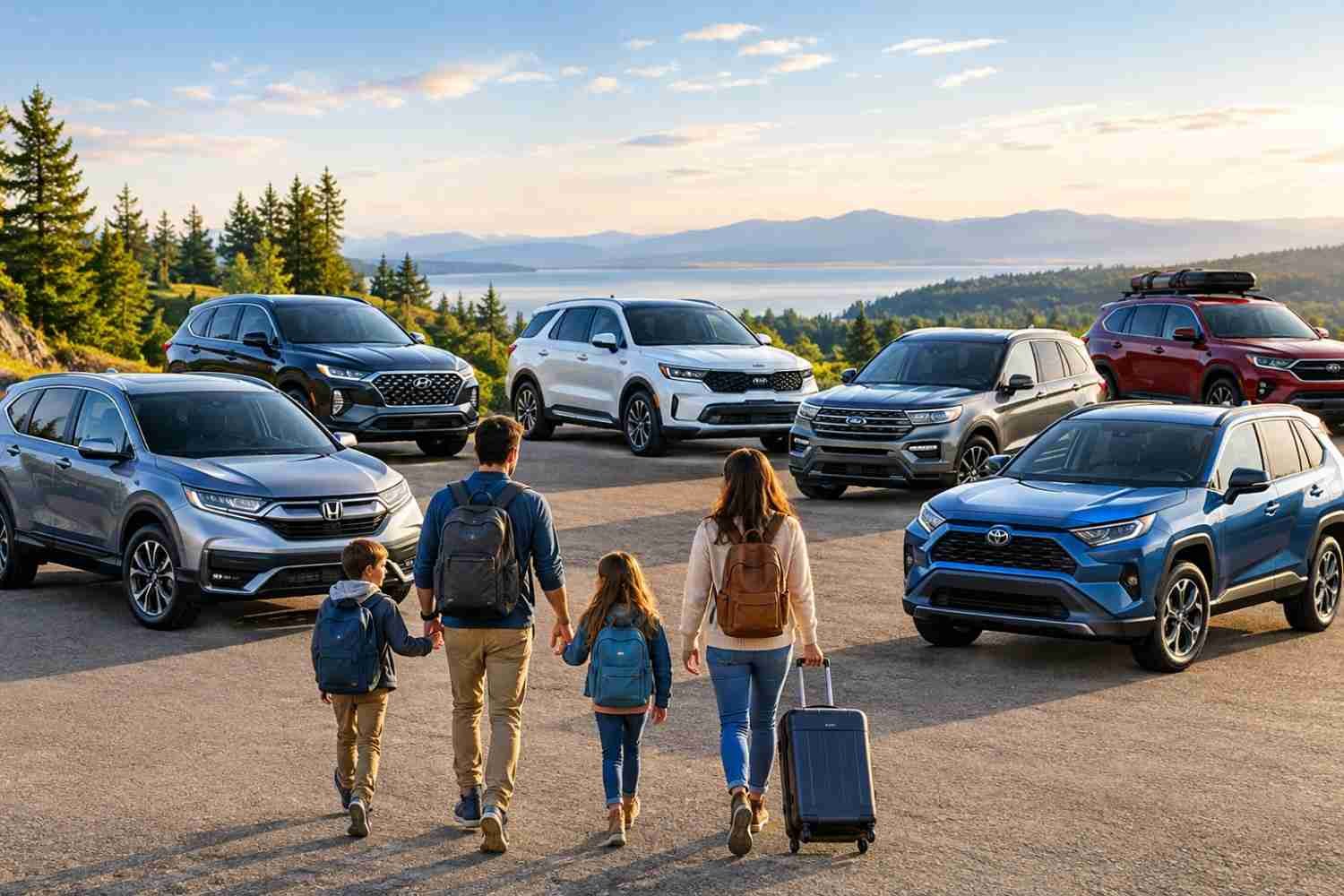
Choosing a family SUV in 2026 is about more than finding a vehicle with enough seats. Parents need convenient access to child seats, enough room for strollers and groceries, comfortable seating for long journeys, and safety features they can rely on. Fuel economy and maintenance costs matter too, especially for families who spend a lot of time driving.
The good news is that today’s SUV market offers options for different needs. A compact hybrid can work well for school runs and daily commuting, while a three-row SUV may be a better fit for a growing family, visiting relatives, or frequent road trips. Electric SUVs also offer another choice for households that can charge at home.
The best SUV for your family depends on how many people you regularly carry, how much cargo space you need, and what you can comfortably spend. Here are eight 2026 models worth comparing before making a decision.
Quick Comparison: Best Family SUVs in 2026
| SUV | Seating category | Best for |
|---|---|---|
| Honda CR-V Hybrid | Two-row compact | Everyday driving and fuel economy |
| Hyundai Tucson Hybrid | Two-row compact | Small families wanting an efficient SUV |
| Honda Passport | Two-row midsize | Families needing more passenger and cargo room |
| Kia Sorento Hybrid | Three-row midsize | Families that occasionally need a third row |
| Toyota Grand Highlander Hybrid | Three-row midsize | Larger families and long-distance trips |
| Hyundai Palisade Hybrid | Three-row midsize | Families wanting space and a more premium cabin |
| Honda Pilot | Three-row midsize | Growing families and regular passenger use |
| Kia EV9 | Three-row electric | Families considering an all-electric vehicle |
These are practical options to compare, not a claim that one ranking suits every household. Independent reviews assess vehicles differently, so consider your own needs alongside the latest testing and pricing.
1. Honda CR-V Hybrid: Best for Everyday Family Driving
The 2026 Honda CR-V Hybrid is worth considering for families who want the practicality of an SUV without moving up to a larger three-row model. Its compact size is useful for navigating city streets, parking in tight spaces, and handling everyday errands.
The hybrid powertrain is an important attraction for drivers who spend a lot of time commuting or dealing with stop-and-go traffic. Car and Driver lists the 2026 CR-V Hybrid among its leading family SUVs, highlighting its everyday usability and efficient powertrain.
The CR-V also offers a practical cabin and cargo area for groceries, backpacks, sports equipment, and luggage. For a household with one or two children, a two-row layout may provide all the space needed without the extra size and cost of a larger SUV.
What families should check: Bring your child’s car seat when visiting a dealership. Check how easily it fits, whether the front passenger still has comfortable legroom, and how much cargo space remains with the stroller or other essentials loaded.
Best for: Small families, daily commuters, and buyers who value an efficient, easy-to-manage SUV.
2. Hyundai Tucson Hybrid: Best for Small Families Wanting Efficiency
The Hyundai Tucson Hybrid is another strong option for families who want a modern compact SUV. It combines a gasoline engine with an electric motor and offers the extra versatility many buyers expect from an SUV.
For parents, the appeal is its balance of passenger comfort, storage space, and everyday convenience. It is large enough for many school runs, shopping trips, and weekend drives while remaining easier to park than a full-size SUV.
The hybrid version is especially worth a look if fuel costs are an important part of your budget. Actual mileage will depend on the trim, weather, route, traffic, and driving habits, so compare the official EPA figures for the exact version you are considering.
Before buying, test the rear seats with all the people and child seats that will regularly travel in the vehicle. Check that the cargo area can handle your family’s normal load without requiring you to leave important items behind.
Best for: Families of three or four who want hybrid efficiency, modern features, and useful cargo space.
3. Honda Passport: Best for Families That Need More Room in Two Rows
Not every family needs a third row. The 2026 Honda Passport is worth comparing if you prefer a roomier two-row SUV with space for passengers, luggage, and outdoor equipment.
Its larger footprint can be useful for families who take road trips, carry sports gear, or regularly travel with older children. A two-row design also means you do not have to manage a third row that you rarely use.
The Passport is a different proposition from smaller crossovers such as the CR-V. It is bigger and oriented toward buyers who want additional space and a more rugged character. That added size can also mean higher fuel consumption and a greater purchase cost, so consider whether you will use the extra room often enough to justify it.
For families who drive in snowy regions, all-wheel drive may be worth considering. However, good tires, sensible driving, and appropriate speed remain important in poor weather.
Best for: Families who need more space than a compact SUV provides but do not require seven or eight seats.
4. Kia Sorento Hybrid: Best for Occasional Third-Row Use
The Kia Sorento Hybrid offers a middle ground between a compact SUV and a larger three-row family vehicle. Its third row gives families extra flexibility when friends, grandparents, or additional children need a ride.
That flexibility comes with a trade-off. The third row is relatively small compared with what you get in some larger SUVs, and cargo room becomes limited when all seats are occupied. It is more appropriate for smaller passengers or shorter journeys than for carrying adults in the back on every road trip.
The hybrid powertrain is appealing to families who want room for additional passengers without automatically choosing a large SUV. Available features and seating configurations vary by trim, so confirm the details of the specific vehicle before purchasing.
Take the time to fold the seats, access the third row, and load your usual family items during a test drive. A vehicle may look spacious in a showroom but feel much less practical when every seat is in use.
Best for: Families who usually need two rows but occasionally carry more passengers.
5. Toyota Grand Highlander Hybrid: Best for Larger Families
The Toyota Grand Highlander Hybrid is worth a close look if you regularly carry several passengers and need cargo space even when the third row is occupied.
Toyota lists seating for up to eight, depending on configuration, and offers gasoline, hybrid, and Hybrid MAX powertrains. The official specifications list up to 97.5 cubic feet of cargo capacity with the rear seats folded, giving owners flexibility when carrying larger loads.
One of its main advantages is that the vehicle is designed around family use rather than simply adding a third row to a smaller SUV. That can make a difference when you’re taking children, luggage, and other equipment on the same trip.
The hybrid version can appeal to households that drive frequently and want to manage fuel consumption without giving up a larger cabin. Still, compare the purchase price of hybrid and gasoline versions, along with the official fuel-economy estimates for each trim.
Before buying, inspect the third-row access and try loading the cargo area with the seats in the configuration you will actually use. When all seats are occupied, available luggage space can be more important than the maximum cargo figure advertised with the seats folded.
Best for: Larger families, frequent road trips, and households that regularly use all three rows.
6. Hyundai Palisade Hybrid: Best for Comfort and Passenger Space
The 2026 Hyundai Palisade Hybrid is a three-row SUV for families who want space, comfort, and a more upscale cabin. The redesigned Palisade offers a roomier-feeling interior and features intended to make family travel more comfortable.
Its hybrid powertrain is also a major reason to consider it. Car and Driver includes the Palisade Hybrid among its leading family SUVs for 2026, and lists a combined fuel-economy range of 29–31 mpg for the model. Actual results depend on the exact configuration and driving conditions.
For families, pay attention to practical details rather than choosing a trim solely for its appearance. Check the ease of accessing the third row, how much space child seats require, and whether the storage compartments and charging ports suit your routines.
Safety deserves a separate check. The Insurance Institute for Highway Safety (IIHS) lists a Top Safety Pick+ award for qualifying 2026 Palisade vehicles built after November 2025. Check the vehicle’s build date and the award’s exact applicability before relying on that designation.
Best for: Families looking for a comfortable three-row SUV with a hybrid option and a well-appointed interior.

7. Honda Pilot: Best for Growing Families
The Honda Pilot is a three-row SUV designed for households that frequently travel with multiple passengers. It is worth comparing if your family has several children, regularly transports relatives, or needs room for everyday items and longer-trip luggage.
The Pilot’s main advantage is its family-oriented layout. Depending on the configuration, buyers can find features intended to make passenger access and interior storage more convenient. Exact seating arrangements and available equipment vary by trim.
A three-row vehicle is not automatically the most practical option for every family. If your children are young, check how easily you can install and reach child seats. If teenagers or adults will use the back row frequently, have them sit there during a test drive rather than judging the space from the front seats.
The Pilot may be larger than necessary for a household that rarely carries more than four people. Compare it with the CR-V or Passport before deciding whether the extra seats justify the cost and fuel use.
Best for: Growing families who regularly need three rows and flexible passenger space.
8. Kia EV9: Best Electric SUV for Families
The Kia EV9 is an all-electric SUV with three rows of seating. It is worth considering for families who want an electric vehicle but still need room for several passengers.
An electric SUV can make sense for a household with predictable daily driving and convenient access to charging. Charging at home can reduce the need for regular fuel stops, although installation costs and electricity rates vary. For longer road trips, planning charging stops becomes part of the journey.
The EV9 is offered in different configurations, including six- and seven-passenger seating options on selected trims. Range depends on the version, wheel and tire setup, weather, speed, and other driving conditions. Cold temperatures and highway driving can reduce the distance available from a full charge.
Before buying, make sure the vehicle suits your local charging options. Consider whether you can charge at home, whether your parking arrangement allows it, and how often your family takes trips beyond the vehicle’s practical range.
Also compare the EV9’s purchase price and insurance costs with a gasoline or hybrid three-row SUV. Lower fuel or energy costs are only one part of the overall ownership calculation.
Best for: Families that want three rows, are ready to go electric, and can plan charging around everyday travel.
How to Choose the Right Family SUV in 2026
The right model depends on your daily routine. Before visiting dealerships, think about the situations your next vehicle needs to handle most often.
Decide whether you need two rows or three
A two-row SUV is usually easier to park and can cost less to buy and operate. For a family with one or two children, it may provide enough room for passengers and luggage.
Three-row models are useful if you regularly transport more than five people. However, the third row can reduce the amount of cargo space available. Check both passenger room and storage space with all the seats in use.
Test child-seat fit and rear-seat access
If you use child safety seats, bring them to the dealership. Confirm that they fit correctly, that the seat belts and LATCH anchors are accessible, and that the front seats can still be adjusted comfortably.
Parents should also check how easily a child can get in and out of the vehicle. A convenient seating arrangement may matter more in everyday life than a larger touchscreen or an extra luxury feature.
Compare safety ratings and available features
Look up the exact model year on the IIHS vehicle ratings website and review available information from the National Highway Traffic Safety Administration.
Check which driver-assistance features are standard and which require a higher trim or optional package. Features such as automatic emergency braking, blind-spot monitoring, and rear cross-traffic alert can be useful, but their availability varies by vehicle.
Also check for recalls using the NHTSA recall lookup tool. A safety award should not replace checking the exact vehicle and its equipment.
Calculate fuel and ownership costs
The purchase price is only one part of your family SUV budget. Compare fuel or charging expenses, insurance, scheduled maintenance, tire replacement, registration, and financing costs.
A hybrid may cost more upfront than a comparable gasoline model, but drivers who cover many miles may benefit from lower fuel use. An electric SUV has a different cost profile, especially if your home charging setup is already available.
Look at the total cost over the period you expect to own the vehicle rather than focusing on the monthly payment alone.
Take a realistic test drive
Test the SUV on roads similar to those you use every day. Check visibility, ease of parking, ride comfort, braking, cabin noise, and how easily passengers can enter and exit.
If possible, bring a stroller, sports bag, or other items you carry regularly. Make sure the cargo area works for your family’s actual needs, not just the figures listed in a specification sheet.
Is an SUV Better Than a Minivan for a Family?
An SUV is a good choice for many families, especially those who want a higher seating position, available all-wheel drive, or a rugged design. However, a minivan may be more practical for households that frequently carry several children.
Minivans generally offer sliding doors that can make access easier in tight parking spaces. Their cabin layouts can also be convenient for loading children and installing car seats.
SUVs offer a wider range of sizes, powertrains, and driving styles. The better choice depends on how you use the vehicle. Compare both types if passenger access and everyday practicality are your main priorities.
Final Thoughts
The best SUVs for families in 2026 are the ones that fit your passenger needs, driving habits, and budget without making everyday life more complicated.
The Honda CR-V Hybrid and Hyundai Tucson Hybrid are worth considering for smaller households. The Honda Passport offers a larger two-row alternative. Families who need three rows can compare the Kia Sorento Hybrid, Toyota Grand Highlander Hybrid, Hyundai Palisade Hybrid, and Honda Pilot. For households ready to make the switch to electric driving, the Kia EV9 adds three-row seating without a gasoline engine.
Before making your final choice, compare the exact trim levels, test child-seat fit, review current safety information, and calculate ownership costs. A careful comparison can help you choose an SUV that works for your family today and continues to meet your needs as they change.