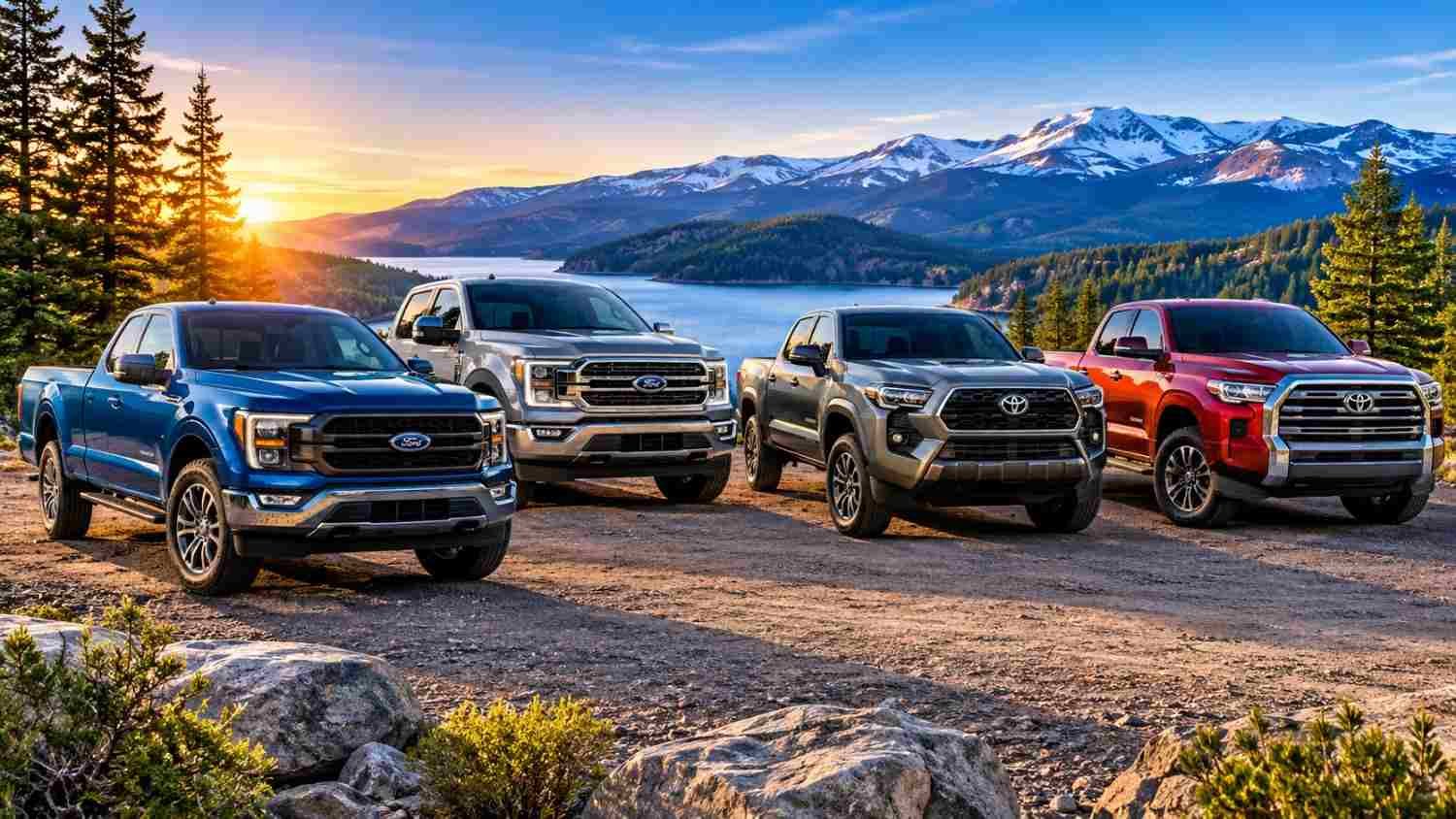
Pickup truck buyers in the United States often need a vehicle that can handle more than one job. A truck might be used for the daily commute, carrying equipment, towing a boat, hauling home improvement supplies, or taking the family on a weekend trip. Traditionally, drivers who wanted this level of capability had to accept relatively high fuel consumption.
Hybrid pickup trucks offer another option. By combining a gasoline engine with an electric motor, they can improve fuel efficiency while still delivering the power and utility expected from a pickup. Some models are particularly well suited to everyday driving, while others provide the strength needed for larger trailers and demanding workloads.
In 2026, Ford and Toyota offer some of the most notable full-hybrid pickup options in the American market. Here is a closer look at the models worth considering, including their fuel economy, towing capacity, pricing, and the type of driver each one may suit.
What Is a Hybrid Pickup Truck?
A hybrid pickup uses both a gasoline engine and an electric motor to help move the vehicle. Depending on the system, the electric motor can assist during acceleration, support low-speed driving, and help the gasoline engine operate more efficiently.
Most of the full-hybrid trucks covered in this guide are conventional hybrids, not plug-in hybrids. This means drivers do not need to connect them to an external charging station. Their battery receives energy through the vehicle’s hybrid system, including regenerative braking.
The main advantage is that drivers can benefit from electric assistance without changing their normal refueling routine. However, fuel savings depend on driving habits, road conditions, vehicle weight, and how often the truck is used for towing.
Best Hybrid Trucks to Consider in 2026
The right model depends on what you expect from your pickup. A smaller hybrid truck may be a better fit for commuting and light-duty work, while a full-size model offers more room and greater towing capability.
These four trucks are worth comparing before making a decision.
1. 2026 Ford Maverick Hybrid
The 2026 Ford Maverick Hybrid is an appealing option for drivers who want pickup practicality without moving to a large, expensive truck. Its smaller size makes it easier to drive and park in cities, while the open cargo bed provides useful space for tools, outdoor equipment, and everyday loads.
For 2026, the 2.5-liter hybrid powertrain is standard on the XL, XLT, and Lariat trims. Front-wheel drive is standard with the hybrid system, and all-wheel drive is available on selected configurations.
Fuel Economy and Performance
The front-wheel-drive hybrid Maverick has EPA-estimated fuel economy of:
- 42 MPG in the city
- 35 MPG on the highway
- 38 MPG combined
These figures make it especially attractive to people who spend a lot of time driving through towns and cities. Stop-and-go traffic is one situation in which a conventional hybrid system can make good use of its electric assistance.
Drivers should remember that an all-wheel-drive configuration may have different fuel economy ratings. The exact vehicle’s window sticker is the best source for its official EPA figures.
Towing and Practical Use
The Maverick Hybrid has a standard maximum towing capacity of 2,000 pounds. With the available 4K Tow Package and the appropriate configuration, that figure increases to 4,000 pounds.
This is enough for certain small utility trailers, lightweight recreational equipment, and other modest towing jobs. It is not designed to replace a full-size pickup for large travel trailers, heavy equipment, or frequent demanding towing.
The Maverick also has a 4-foot-5-inch cargo bed, making it useful for everyday hauling without requiring the space of a larger truck.
Starting Price
The 2026 Ford Maverick starts at an MSRP of approximately $28,145 for the XL. The hybrid engine is standard on the XL, XLT, and Lariat trims.
The final price increases with trim selection, optional equipment, and applicable delivery charges.
Who should consider it?
The Maverick Hybrid makes sense for drivers who want a practical daily pickup, strong city fuel economy, and enough capability for light hauling. It is a particularly reasonable starting point for someone who does not need the size or towing strength of a full-size truck.
2. 2026 Ford F-150 PowerBoost Hybrid
Drivers who need a more substantial pickup should take a closer look at the 2026 Ford F-150 PowerBoost Hybrid. Unlike the compact Maverick, the F-150 is a full-size truck designed for demanding work, long-distance travel, and heavier trailers.
Its PowerBoost system combines a 3.5-liter twin-turbocharged V6 gasoline engine with an electric motor and a 10-speed automatic transmission. The result is a hybrid powertrain that retains the capability expected from a large pickup.
Fuel Economy and Performance
For the 2026 F-150 PowerBoost, representative EPA-estimated fuel economy ratings are:
- 22 city / 24 highway / 23 combined MPG with four-wheel drive.
- 23 city / 25 highway / 24 combined MPG with rear-wheel drive.
The exact rating depends on the drivetrain and vehicle configuration.
These figures are useful for buyers comparing the hybrid F-150 with conventional gasoline-powered full-size trucks. However, a truck’s actual mileage can drop when carrying heavy loads, towing a trailer, driving at high speeds, or operating in difficult conditions.
Towing Capacity
Towing capability is one of the strongest reasons to consider the F-150 PowerBoost. Ford lists a maximum available towing capacity of 11,600 pounds for the 2026 PowerBoost hybrid.
That rating makes the truck suitable for many demanding recreational and work-related towing needs when properly equipped. Buyers considering a travel trailer, boat, or work trailer should still confirm the rating for their exact cab, bed, drivetrain, axle, and towing package.
Ford also offers Pro Power Onboard on the F-150 PowerBoost. This system can provide electrical power for compatible tools and equipment, which may be useful at work sites, campsites, and outdoor events.
Starting Price
The 2026 F-150 XLT starts at approximately $44,695, and the PowerBoost hybrid engine is available on selected trims. This is the starting price of the XLT before adding the hybrid powertrain and other optional equipment, not a guaranteed price for a fully equipped hybrid truck.
Buyers should use Ford’s build-and-price tool or request a dealer quote to compare the exact hybrid configuration they want.
Who should consider it?
The F-150 PowerBoost is a strong choice for drivers who need full-size truck capability but also want the fuel-efficiency advantages of a hybrid system. It is especially worth considering for people who regularly carry equipment, tow trailers, or use their pickup for both work and personal travel.
3. 2026 Toyota Tacoma i-FORCE MAX Hybrid
The Toyota Tacoma has a long-standing reputation among midsize pickup buyers. Its i-FORCE MAX hybrid powertrain gives the 2026 model a different character by combining a turbocharged gasoline engine with electric assistance.
Rather than focusing only on fuel economy, Toyota has designed this system to deliver strong torque and useful performance. That combination makes the Tacoma particularly interesting for drivers who enjoy outdoor activities and off-road travel.
Fuel Economy and Performance
The Tacoma i-FORCE MAX uses a 2.4-liter turbocharged four-cylinder hybrid powertrain. It produces up to:
- 326 horsepower
- 465 lb-ft of torque
Fuel economy depends on the trim. Many 2026 hybrid configurations are rated at approximately 22 MPG city and 24 MPG highway, with a 23 MPG combined rating. The Limited i-FORCE MAX has a different rating of approximately 23 city and 24 highway MPG.
These figures are worth checking carefully when comparing different Tacoma trims because equipment and configuration can affect fuel economy.
Towing Capacity
The 2026 Tacoma i-FORCE MAX can tow up to 6,000 pounds when properly equipped.
This makes it suitable for many smaller recreational trailers, boats, and outdoor equipment. However, buyers should not assume that every Tacoma Hybrid can tow the maximum amount. Cab configuration, bed length, payload, passengers, and installed equipment all affect the final rating.
The hybrid Tacoma also offers a useful balance between off-road capability and everyday driving. Selected trims include equipment designed for rough terrain, while the available onboard power supply can be useful when camping or working outdoors.
Starting Price
The 2026 Toyota Tacoma TRD Sport i-FORCE MAX starts at approximately $47,335 MSRP. The TRD Off-Road i-FORCE MAX starts at approximately $47,635, while more specialized versions such as the Trailhunter and TRD Pro cost considerably more.
The higher trims add equipment intended for off-road travel and other specialized uses, so buyers should compare features rather than choosing based on price alone.
Who should consider it?
The Tacoma Hybrid is worth considering for drivers who want a midsize pickup with strong torque, four-wheel-drive capability, and equipment suited to outdoor adventures. It may be a better match for someone who values maneuverability and off-road ability more than the maximum towing capacity of a full-size truck.
4. 2026 Toyota Tundra i-FORCE MAX Hybrid
For buyers who need more room and strength than a midsize pickup can provide, the Toyota Tundra i-FORCE MAX is another important option.
The Tundra is a full-size pickup with a twin-turbocharged 3.4-liter V6 hybrid powertrain. It combines strong output with a spacious cabin and the towing capability needed for larger recreational and work-related loads.
Fuel Economy and Performance
The i-FORCE MAX hybrid powertrain produces:
- 437 horsepower
- 583 lb-ft of torque
Fuel economy varies by trim. For example, the 2026 Tundra Limited i-FORCE MAX is rated at approximately 20 MPG city and 24 MPG highway. Other hybrid trims have different ratings, depending on their equipment and configuration.
Although these figures are not as high as those of a compact hybrid pickup, they are worth considering in the context of a full-size truck with considerably greater power and towing capability.
Towing Capacity
The Tundra i-FORCE MAX can tow up to approximately 11,450 pounds in its highest-rated hybrid configuration.
That is a substantial rating for drivers who regularly tow larger trailers, boats, or recreational equipment. Still, the maximum applies only to specific configurations. Some trims and equipment combinations have lower limits.
Toyota also offers the Tundra in several grades, including Limited i-FORCE MAX, Platinum i-FORCE MAX, 1794 Edition i-FORCE MAX, and TRD Pro. Their features, prices, and towing ratings are not identical.
Starting Price
The 2026 Toyota Tundra Limited i-FORCE MAX starts at approximately $58,560 MSRP. Higher hybrid trims, including Platinum and 1794 Edition, cost more.
The Tundra is therefore a more expensive choice than the Maverick or Tacoma. Buyers should consider whether they will regularly use its extra space, power, and towing capability before choosing it over a smaller pickup.
Who should consider it?
The Tundra Hybrid is a suitable option for buyers who want a powerful full-size pickup with strong towing capability, a spacious cabin, and hybrid assistance. It is particularly relevant for people who frequently travel with equipment or pull substantial recreational loads.
2026 Hybrid Truck Comparison: MPG, Towing, and Price
The following table brings the main differences together. Prices are starting MSRPs for the stated hybrid trim or base model, not final out-the-door prices. Fuel economy and towing figures vary by configuration.
| Hybrid truck | EPA-estimated fuel economy | Maximum towing capacity | Starting MSRP reference |
|---|---|---|---|
| Ford Maverick Hybrid | 42 city / 35 highway / 38 combined (FWD) | 4,000 lbs. with 4K Tow Package | $28,145 |
| Ford F-150 PowerBoost | 22 city / 24 highway / 23 combined (4WD) | 11,600 lbs. | F-150 XLT starts at $44,695 before hybrid option |
| Toyota Tacoma i-FORCE MAX | Around 22 city / 24 highway / 23 combined on many trims | 6,000 lbs. | $47,335 for TRD Sport i-FORCE MAX |
| Toyota Tundra i-FORCE MAX | Around 20 city / 24 highway on Limited hybrid | Up to 11,450 lbs. | $58,560 for Limited i-FORCE MAX |
A higher towing number does not automatically make a truck the better purchase. The best choice depends on how much weight you actually need to tow, how much fuel you use during normal driving, and how much you are comfortable spending.
Hybrid Truck vs. Gas Truck: Which One Makes More Sense?
A hybrid truck is not automatically the right option for every pickup buyer. Conventional gasoline trucks continue to make sense for many drivers, particularly those who prioritize a lower purchase price or need a specific engine and configuration.
The difference becomes clearer when you look at how the vehicle will be used.
Daily Commuting
For regular commuting, a hybrid pickup can be appealing because it can use electric assistance during certain driving conditions. This is particularly helpful in stop-and-go traffic, where conventional gasoline engines may spend more time idling and accelerating.
The Maverick Hybrid is especially attractive for this type of use because of its smaller size and higher city fuel-economy rating.
Towing and Heavy Loads
Towing changes the way any pickup consumes fuel. Pulling a heavy trailer requires additional power, and a hybrid truck is not exempt from the resulting increase in fuel consumption.
The F-150 PowerBoost and Tundra i-FORCE MAX are better suited to buyers who need full-size towing capability. The Tacoma Hybrid sits between the compact Maverick and larger trucks in terms of size and towing capacity.
Before purchasing, compare the trailer’s loaded weight with the exact vehicle’s published towing rating.
Purchase Price and Ownership Costs
Hybrid models can cost more than comparable gasoline versions, depending on the trim and equipment. The initial purchase price is only one part of the overall cost.
Buyers should also consider:
- Expected annual mileage.
- Local gasoline prices.
- Insurance costs.
- Tire replacement and maintenance.
- How often the truck will tow or carry heavy loads.
- The difference between the hybrid and gasoline versions being compared.
A driver who travels many miles in city traffic may benefit differently from a hybrid system than someone who mainly drives long highway routes or regularly tows heavy equipment.
What to Check Before Buying a Hybrid Truck
Choosing the right truck involves more than comparing horsepower and advertised fuel economy. A few practical checks can help prevent an expensive mistake.
1. Confirm the exact towing rating. Check the rating for the specific engine, cab, bed, drivetrain, and tow package. A model’s advertised maximum may not apply to every version.
2. Understand payload capacity. Towing capacity and payload capacity are different measurements. Passengers, luggage, tools, and trailer tongue weight all count toward the truck’s weight limits.
3. Compare the right fuel economy figures. Look at city, highway, and combined EPA estimates for the exact trim. Do not compare a two-wheel-drive rating for one truck with a four-wheel-drive rating for another.
4. Review the available equipment. If you plan to tow, check for the required hitch receiver, trailer brake controller, cooling equipment, mirrors, and other towing-related features.
5. Ask about hybrid warranty coverage. Review the manufacturer’s warranty documents for the high-voltage battery and other hybrid components. Coverage terms can differ, and buyers should confirm the details for the model they intend to purchase.
6. Take a proper test drive. Pay attention to braking, acceleration, steering, cabin comfort, visibility, and how the truck behaves in normal traffic. A vehicle that looks impressive on paper should also feel suitable for your everyday needs.
Which Hybrid Truck Is Best for Different Buyers?
There is no single hybrid pickup that suits every driver. Each of these models serves a different purpose.
- Best for everyday driving and city fuel economy: Ford Maverick Hybrid. Its smaller size and strong city MPG rating make it a practical daily pickup.
- Best for full-size capability and towing: Ford F-150 PowerBoost. It combines a powerful hybrid engine with a maximum available tow rating of 11,600 pounds.
- Best for midsize off-road use: Toyota Tacoma i-FORCE MAX. Its strong torque and off-road-oriented trim options make it attractive for outdoor enthusiasts.
- Best for a powerful Toyota full-size hybrid: Toyota Tundra i-FORCE MAX. It offers substantial output, a roomy cabin, and strong towing capability.
The most suitable model is the one that matches your regular driving, hauling, and towing needs without making you pay for capability you rarely use.
Final Thoughts
Hybrid pickup trucks have become a practical option for American buyers who want a combination of everyday efficiency and truck capability. The 2026 Ford Maverick Hybrid stands out for city driving, while the Ford F-150 PowerBoost offers a stronger balance of full-size power and towing capacity. Toyota’s Tacoma i-FORCE MAX and Tundra i-FORCE MAX give buyers additional choices across the midsize and full-size pickup categories.
Before making a purchase, compare the exact trim, fuel economy rating, towing limits, equipment, and total price. A little research can help you choose a truck that fits your needs for years to come.
There may also be situations where you purchase a pickup in another state or need to relocate it after a move. In that case, arranging professional transportation can save you from making a long drive yourself. You can explore cross-country car shipping services from NG Auto Haulers LLC or learn more about state-to-state vehicle shipping for transportation between locations across the United States.
Frequently Asked Questions
Are hybrid trucks worth buying in 2026?
They can be worthwhile for drivers who want better fuel economy in certain driving conditions while keeping the utility of a pickup. Whether the extra purchase cost makes sense depends on annual mileage, fuel prices, towing needs, and the price difference between comparable models.
What is the most fuel-efficient hybrid truck in 2026?
The 2026 Ford Maverick Hybrid is one of the most fuel-efficient pickup options in this group. Its front-wheel-drive version has EPA-estimated ratings of 42 MPG city, 35 MPG highway, and 38 MPG combined.
Which hybrid truck can tow the most in 2026?
The 2026 Ford F-150 PowerBoost has a maximum available towing capacity of 11,600 pounds. The exact rating depends on equipment and configuration, so buyers should verify the figure for the individual truck.
Does a hybrid pickup need to be plugged in?
No. The conventional hybrid pickups discussed in this guide recharge their batteries through the vehicle’s own hybrid system. They do not need to be plugged into a home or public charging station.
Is the Toyota Tacoma Hybrid good for towing?
The 2026 Tacoma i-FORCE MAX can tow up to 6,000 pounds when properly equipped. That can be sufficient for many smaller boats and recreational trailers, but buyers with heavier towing requirements may need a full-size pickup.
Do hybrid trucks save fuel when towing?
A hybrid system can help with efficiency in some driving situations, but towing a heavy trailer increases engine workload and fuel consumption. Actual mileage depends on trailer weight, speed, terrain, weather, and vehicle configuration.