
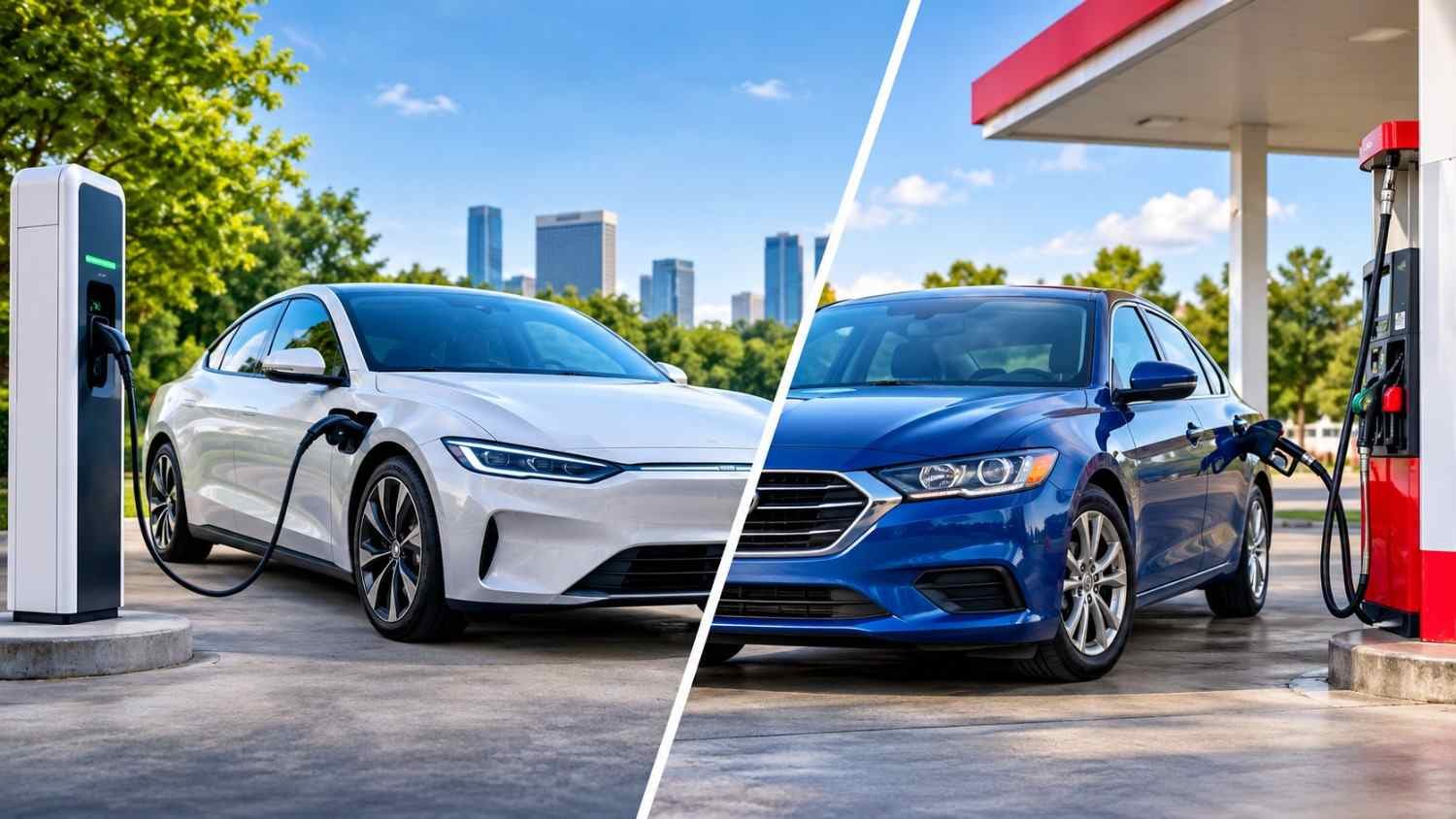
Choosing between an electric car and a gas-powered vehicle is about more than the price on the window sticker. The real difference becomes clear after several years of driving, when fuel, electricity, maintenance, insurance, depreciation, and repair expenses begin to add up.
For drivers across the United States, an electric vehicle (EV) can offer lower day-to-day running costs, especially when most charging happens at home. However, a gasoline car may still cost less overall when its purchase price, resale value, and financing expenses are considered.
So, which option is more affordable in the long run?
The answer depends on how much you drive, where you live, what vehicle you buy, and how long you plan to keep it. Here is a closer look at the costs that matter most.
1. Purchase Price: Which Vehicle Costs More Upfront?
The purchase price is usually the first thing buyers compare. Gas-powered cars are available across a wide range of budgets, including affordable sedans, family SUVs, and used vehicles. Electric cars also cover several price categories, but some models still carry a higher upfront cost than comparable gasoline vehicles.
The actual price difference depends on the vehicle’s brand, size, range, features, and trim level. A basic electric sedan should not be compared with a fully equipped luxury gas SUV. Buyers should look at vehicles in the same category before deciding which one offers better value.
Financing also matters. A higher purchase price can mean a larger loan, more interest over time, and a higher monthly payment. Even when an EV saves money on electricity, those savings may take years to balance out a higher purchase cost.
One more detail matters for American buyers in 2026: the federal new and previously owned clean vehicle tax credits are no longer available for vehicles acquired after September 30, 2025. State, local, and utility incentives may differ, so check the current rules in your area instead of assuming a federal discount will apply.
2. Fuel and Charging Costs Over Several Years
Energy costs are one of the clearest differences between electric cars and gas cars.
A gasoline vehicle needs regular trips to the gas station. The amount spent depends on fuel prices, engine efficiency, and annual mileage. Drivers who commute long distances or frequently travel between cities can spend a considerable amount on gasoline over a year.
An electric car uses electricity stored in its battery. Owners who charge at home can often pay less per mile than they would for gasoline, although electricity rates vary by state, utility provider, and charging time.
For perspective, AAA’s September 2026 analysis used an average regular gasoline price of approximately $4.15 per gallon and an average residential EV charging rate of 18 cents per kilowatt-hour.
Consider this example for someone driving 15,000 miles annually:
| Example expense | Gas-powered car | Electric car |
|---|---|---|
| Assumed efficiency | 30 MPG | 4 miles per kWh |
| Annual distance | 15,000 miles | 15,000 miles |
| Energy required | 500 gallons | 3,750 kWh |
| Example energy price | $4.15 per gallon | $0.18 per kWh |
| Estimated annual cost | $2,075 | $675 |
Under these assumptions, the EV costs approximately $1,400 less per year for energy.
These are illustrative calculations, not guaranteed costs for every vehicle. They do not include charging losses, public charging fees, special electricity rates, or changes in fuel and electricity prices.
The difference can become more noticeable over five or seven years, particularly for drivers who cover many miles and have access to affordable home charging. On the other hand, people who depend heavily on public fast chargers may experience smaller savings.
3. Maintenance and Repair Expenses
Maintenance is another area where electric and gasoline vehicles differ.
A traditional gas-powered vehicle has an engine and several systems that require regular attention. Depending on the model and maintenance schedule, owners may need oil changes, spark plug replacements, transmission servicing, exhaust repairs, and other routine work.
An all-electric vehicle has fewer moving parts in its drivetrain. It does not need engine oil changes or spark plug replacements, and regenerative braking can reduce wear on the brake pads.
The U.S. Department of Energy’s Alternative Fuels Data Center lists average maintenance costs of approximately 6.1 cents per mile for all-electric vehicles compared with 10.1 cents per mile for gasoline vehicles in its consumer comparison.
That does not mean EVs are maintenance-free. Tires, suspension components, cabin air filters, brake fluid, windshield wipers, and other items still need attention. Tire replacement costs can also vary depending on vehicle weight, tire choice, and driving habits.
Both vehicle types can develop unexpected mechanical or electrical problems. The cost of a repair depends on the make, model, parts availability, and the technician’s experience.
For many owners, the EV advantage comes from fewer routine service requirements rather than the complete absence of maintenance bills.
4. Depreciation: The Cost Many Buyers Overlook
Depreciation is the reduction in a vehicle’s market value as it gets older and accumulates mileage. It is one of the biggest expenses in long-term vehicle ownership, even though owners do not pay it as a monthly service bill.
Electric cars have faced changes in resale values as battery technology, driving ranges, new model prices, and buyer preferences evolve. Some EVs lose value quickly during their first few years, while others hold their value better.
Gas-powered vehicles also depreciate, but the rate varies significantly by model, reliability, demand, mileage, and condition.
AAA’s September 2026 Your Driving Costs analysis found that selected electric medium sedans had about twice the depreciation of comparable gasoline models in its comparison. The study estimated that gas-powered medium sedans cost $10,582 per year to own, approximately $3,080 less annually than the EV medium sedans included in that category.
This is an important reminder: saving money on charging does not automatically make an electric vehicle cheaper to own.
For buyers who expect to sell or trade in their vehicle after three to five years, resale value deserves particular attention. Research used prices for the exact models you are considering rather than relying on general assumptions about EVs or gas cars.
5. Insurance Costs: Compare Quotes Before Buying
Insurance is another expense that should be included in a realistic ownership budget.
The price of an insurance policy depends on several factors, including the driver’s age, driving record, location, coverage level, vehicle value, and repair costs.
Some electric vehicles can be more expensive to insure because of their purchase price, specialized components, or the cost of repairing collision damage. However, this is not true for every EV. A lower-priced electric model may have a different insurance profile from a high-end electric SUV.
Gas cars are not automatically cheaper to insure either. A popular sports car, large SUV, or expensive luxury sedan can carry substantial insurance premiums.
Before signing a purchase agreement, request insurance quotes for the exact year, make, model, and trim of both vehicles. Compare the same coverage limits and deductibles so the difference is meaningful.
A small monthly premium difference can turn into a noticeable expense over several years.

6. Home Charging Equipment and Installation
Home charging can make electric vehicle ownership more convenient, but setting it up may involve an additional expense.
Some EV owners can use a standard household outlet for slower Level 1 charging. Drivers who need faster charging may choose a Level 2 home charger.
According to the U.S. Department of Energy, Level 2 charging equipment can cost approximately $500 to $4,000 before installation and applicable incentives. Installation costs depend on the home’s electrical system, distance from the electrical panel, wiring requirements, permits, and local labor rates.
Some homes may need electrical upgrades, which can increase the initial expense.
For buyers who own a house and expect to keep an EV for several years, the investment may be worthwhile. Renters and apartment residents should first check whether charging is available at their property or workplace.
It is also worth checking electricity rates offered by local utility companies. Some providers have time-of-use plans that make charging during certain hours less expensive.
7. Battery Life and Warranty Considerations
The battery is one of the most important components of an electric car. It stores the energy needed to power the vehicle, and its condition can influence driving range and resale value.
Like other rechargeable batteries, EV batteries gradually lose some capacity over time. The amount of degradation depends on factors such as battery design, temperature, charging habits, mileage, and the vehicle’s thermal management system.
The U.S. Department of Energy explains that manufacturers typically offer EV battery warranties of eight years or 100,000 miles, although coverage can be longer depending on the vehicle and applicable state requirements.
Buyers should read the actual warranty document rather than assuming every model has identical coverage. Check the warranty period, mileage limit, capacity-retention terms, exclusions, and whether the coverage transfers to another owner.
For someone considering a used electric car, a battery health report and a review of the remaining warranty can be particularly valuable.
Battery replacement should not be treated as a routine expense that every EV owner will automatically face. However, understanding the warranty and the potential cost of out-of-warranty repairs is an important part of evaluating long-term ownership.
8. Which Is More Affordable for High-Mileage Drivers?
Annual driving distance can change the financial comparison.
A person who drives only a few thousand miles each year may not save enough on electricity to offset a higher purchase price or insurance premium. In contrast, someone who drives 15,000 to 20,000 miles annually could benefit more from lower energy costs.
For example, commuters who travel long distances every working day may use considerably more gasoline than drivers who mostly take short local trips. If those commuters can charge at home at a reasonable electricity rate, an EV may offer meaningful operating savings.
However, high mileage also increases tire wear, vehicle depreciation, and the need for maintenance on either type of vehicle.
It is best to compare the total cost across your expected ownership period instead of looking at just one monthly expense.
9. Are Used Electric Cars Worth Considering?
A used electric car may offer a different financial picture from buying a brand-new model.
Because some EVs experience substantial depreciation during their early years, a second or third owner may be able to purchase one at a lower price than its original buyer paid.
A January 2026 study from the University of Michigan’s Center for Sustainable Systems examined ownership costs for new and used gasoline, hybrid, plug-in hybrid, and battery-electric vehicles. Across the vehicle categories, cities, and charging strategies included in the research, the study found that used battery-electric vehicles had the lowest total ownership cost among the powertrains it evaluated.
The researchers also estimated that buying a three-year-old midsize SUV rather than a new one could reduce seven-year ownership costs by approximately $13,000 for the battery-electric model in their comparison.
These results do not guarantee the same savings for every used EV. The vehicle’s condition, remaining battery warranty, purchase price, insurance, and access to affordable charging still matter.
Before purchasing a used electric car, arrange an inspection, review its service history, check for outstanding recalls, and ask for information about battery health.
10. Electric Cars vs. Gas Cars: Which One Should You Choose?
There is no single answer for every American driver. The better choice depends on your financial situation, daily routine, location, and the models you are comparing.
An electric car may be a strong option when you:
- Have a place to charge at home.
- Drive a significant number of miles each year.
- Can purchase an EV at a competitive price.
- Plan to keep the vehicle for several years.
- Have access to affordable electricity and suitable charging facilities.
A gasoline vehicle may make more financial sense when you:
- Want a lower purchase price.
- Drive relatively few miles each year.
- Frequently travel through areas with limited charging access.
- Find a gas-powered model with strong resale value.
- Prefer the convenience of quick refueling for regular long-distance trips.
It is also worth considering a hybrid if you want better fuel economy without depending entirely on charging infrastructure. A hybrid combines a gasoline engine with an electric motor, although its maintenance requirements are different from those of a fully electric vehicle.
Final Verdict: Look Beyond the Purchase Price
When comparing electric cars vs. gas cars, long-term ownership costs tell a more complete story than fuel savings alone.
EVs can reduce energy and routine maintenance expenses, especially for drivers who charge at home and travel substantial distances. Gas-powered vehicles may offer an advantage through a lower purchase price, financing costs, or stronger resale value in certain categories.
The used-car market adds another factor. A well-priced used EV with a healthy battery and remaining warranty may offer an attractive ownership cost compared with buying a new vehicle.
Before making a decision, calculate the purchase price, loan interest, energy costs, maintenance, insurance, charging setup, depreciation, and expected resale value over the number of years you plan to own the vehicle.
The smartest purchase is not necessarily the one with the cheapest fuel or the newest technology. It is the vehicle that fits your driving needs and costs less to own over time.
Frequently Asked Questions
Are electric cars cheaper to own than gas cars?
Electric cars can have lower electricity and routine maintenance costs, but their purchase price, depreciation, insurance, and charging expenses can affect the total. The cheapest option depends on the specific models and the owner’s driving habits.
How much can an EV owner save on fuel each year?
Savings vary according to annual mileage, vehicle efficiency, gasoline prices, electricity rates, and charging habits. Home charging is generally more economical than relying exclusively on public fast chargers.
Do electric cars require less maintenance?
Generally, yes. Fully electric vehicles have fewer drivetrain components and do not need engine oil changes or spark plug replacements. However, they still require tire, brake, suspension, and other routine maintenance.
How long do electric car batteries last?
Battery life varies by model, climate, charging habits, and usage. Many manufacturers provide battery warranties of eight years or 100,000 miles, but buyers should review the specific warranty for the vehicle they are considering.
Is buying a used electric car a good financial decision?
It can be. A used EV may benefit from the depreciation that occurred during its first few years. However, buyers should check battery health, maintenance records, remaining warranty, vehicle history, and the availability of charging.
Are federal EV tax credits available for cars purchased in 2026?
The federal new and previously owned clean vehicle credits are not available for vehicles acquired after September 30, 2025. Buyers should check current state, local, and utility programs before including any incentive in their budget.