
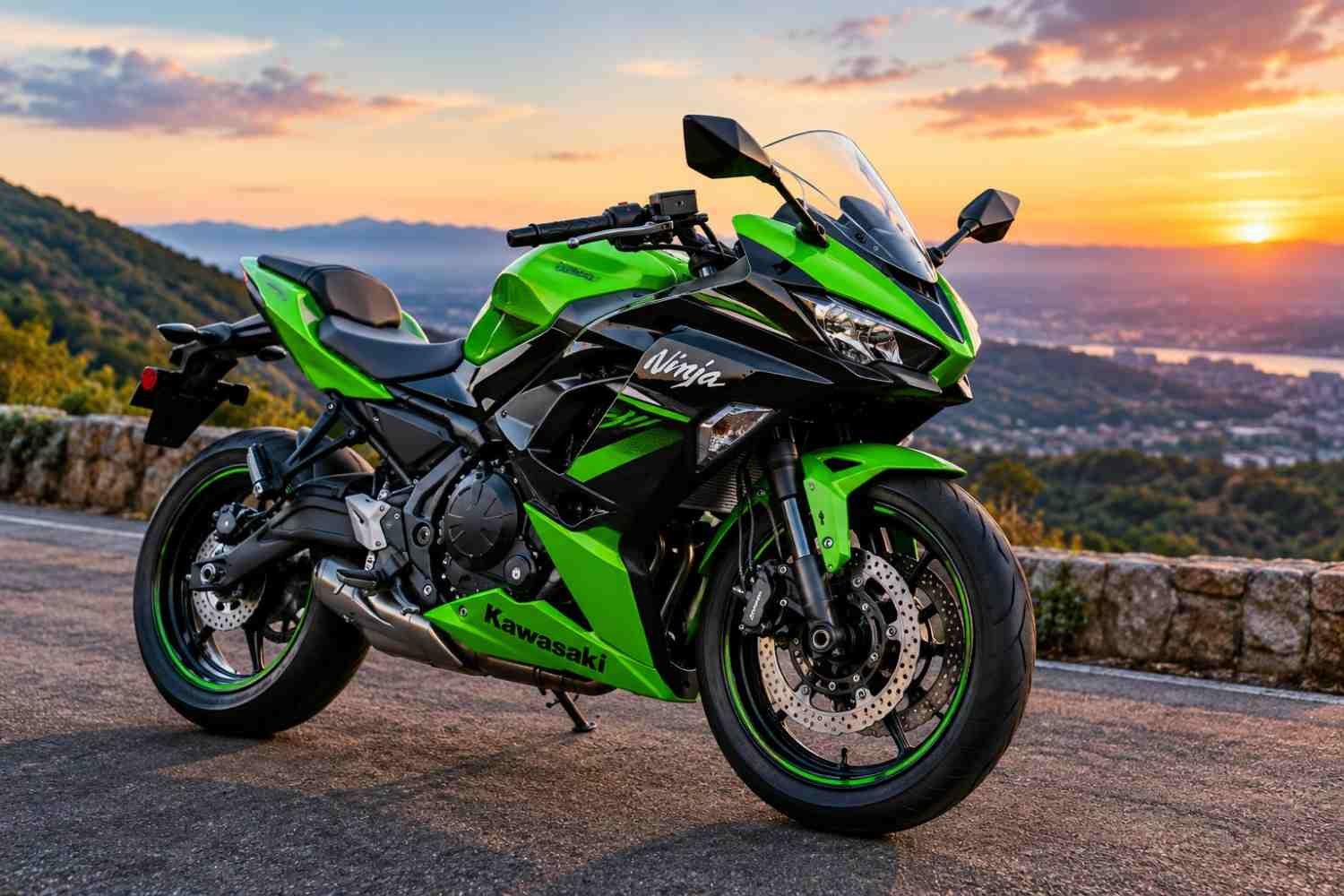
The 2027 Kawasaki Ninja 650 brings meaningful updates to one of Kawasaki’s most recognizable middleweight sport motorcycles. Rather than introducing an entirely new engine, Kawasaki has focused on the areas riders notice on the road: front suspension, braking performance, dashboard technology, smartphone connectivity, and everyday comfort.
For riders in the United States, the new model is worth a closer look because it keeps the familiar 649cc parallel-twin engine while adding upgraded front-end hardware and modern rider information features. The result is a motorcycle designed to retain its practical character while offering a more refined sport-riding experience. Kawasaki has published the US model’s specifications and pricing on its official Ninja 650 page.
2027 Kawasaki Ninja 650: Quick Overview
| Feature | US model specification |
|---|---|
| Engine | 649cc, liquid-cooled, parallel-twin, DOHC |
| Maximum horsepower | 67 hp at 8,000 rpm |
| Maximum torque | 48.5 lb-ft at 6,700 rpm |
| Transmission | 6-speed |
| Front suspension | 37mm Showa SFF-BP inverted fork |
| Rear suspension | Horizontal back-link, adjustable spring preload |
| Front brakes | Dual 300mm discs with radial-mounted 4-piston calipers |
| Instrument display | 4.3-inch TFT color screen |
| Seat height | 30.9 inches |
| Fuel capacity | 4.0 gallons |
| Starting US MSRP | $8,099, before destination, taxes, and fees |
Specifications are for the US-market 2027 Ninja 650 ABS. Equipment, colors, and specifications can vary by market. See Kawasaki’s official specification page for the latest details.
What’s New on the 2027 Kawasaki Ninja 650?
The most important changes for 2027 are found in the suspension and braking systems. Kawasaki has also refreshed the instrument display and expanded smartphone-connected functions. These are practical updates rather than a complete redesign, but they could make a noticeable difference to riders who enjoy winding roads, daily commuting, and weekend rides.
1. New Showa SFF-BP Inverted Front Fork
One of the biggest updates is the 37mm Showa Separate Function Fork–Big Piston (SFF-BP) inverted front fork. It replaces the conventional telescopic front fork used on the earlier model.
The revised design is intended to improve front-end control during braking, weight transfer, and corner entry. Kawasaki explains that the larger piston design reduces damping pressure, helping the motorcycle feel more stable as the rider transitions into a turn.
For everyday US riding, this upgrade matters because a motorcycle needs to handle more than smooth pavement. Riders encounter changing road surfaces, uneven corners, and unpredictable traffic conditions. Improved suspension control can help the bike feel more composed, although actual performance still depends on road conditions, setup, tires, and rider technique.
2. Upgraded Four-Piston Radial Front Brakes
Kawasaki has also upgraded the front braking hardware. The 2027 Ninja 650 uses radial-mounted four-piston front calipers with dual semi-floating 300mm discs.
This replaces the previous arrangement of axially mounted two-piston front calipers. The change is intended to provide a more responsive feel at the brake lever and more controllable braking performance.
Strong, predictable brakes are useful during everyday riding, but they are especially important when traffic slows unexpectedly or a rider needs to adjust speed while approaching a curve. The improved hardware does not replace safe following distances or proper braking technique; it is an upgrade to the system that helps the rider manage speed.
The motorcycle also retains ABS on the US model, providing additional support against wheel lock during hard braking in appropriate conditions. ABS is a rider aid, not a guarantee against a crash.
3. Updated 4.3-Inch TFT Color Display
The Ninja 650 gains an updated 4.3-inch TFT color instrument display. The screen gives the cockpit a more modern appearance while presenting key riding information in a digital format.
A clear display is useful when checking motorcycle information without taking unnecessary attention away from the road. The updated interface also complements the bike’s refreshed technology package.
For riders comparing the 2027 Ninja 650 with an older used model, the new display is one of the everyday differences worth checking in person. Review the available screen functions at a dealership, because connected features and software capabilities can vary with the market and compatible devices.
4. More Smartphone Connectivity Through Rideology
Kawasaki has expanded the connected features offered through its Rideology motorcycle app. The new Ninja 650 specification includes smartphone connectivity, with navigation and voice-command functions listed among the updates.
For riders who use a motorcycle for commuting or exploring unfamiliar roads, connected functions can be convenient. Navigation support may reduce the need to handle a phone while moving, but riders should always configure directions and settings before setting off.
Do not assume every function is automatically available without additional requirements. App compatibility, permissions, subscription or licensing conditions, and feature availability may differ by region. Check the current US owner information and app details before relying on a specific connected feature.
5. Revised Rear Suspension Settings
The front fork is not the only suspension component to receive attention. Kawasaki has revised the rear suspension settings, including an increased spring rate, to work with the updated front end.
The rear uses a horizontal back-link suspension system with adjustable spring preload. That adjustment can help accommodate different loads and riding requirements, within the limits of the manufacturer’s recommended setup.
The aim is to maintain the Ninja 650’s approachable handling while improving control during more spirited riding. Riders who carry a passenger or luggage should consult the owner’s manual for the correct setup and loading limits rather than assuming the factory setting suits every situation.
2027 Kawasaki Ninja 650 Engine and Performance
Despite the chassis and technology changes, Kawasaki has retained the familiar 649cc parallel-twin engine. It is a liquid-cooled, four-stroke DOHC design paired with a six-speed transmission.
The US specification lists 67 horsepower at 8,000 rpm and 48.5 lb-ft of torque at 6,700 rpm. These figures give buyers a useful starting point when comparing middleweight motorcycles, although published horsepower figures can depend on the measurement standard used.
The engine’s continued use is important because it means the 2027 update is primarily about refining the riding experience instead of chasing a larger displacement or radically different engine character.
What does the 649cc engine mean for everyday riders?
Engine displacement alone does not determine whether a motorcycle is suitable for someone. Ergonomics, throttle response, weight, braking, seat height, and experience all matter.
The Ninja 650’s middleweight format may appeal to riders seeking a sport-styled motorcycle for commuting, weekend trips, and enjoyable rides on open roads. Prospective owners should arrange a dealership visit and, where available, a test ride to evaluate whether the power delivery and riding position match their needs.
New riders should also consider completing a recognized motorcycle safety course, selecting appropriate protective gear, and checking local licensing requirements before riding on public roads.

Design, Riding Position, and Everyday Comfort
The Ninja 650 continues with its sharp sportbike styling and lightweight trellis frame. For 2027, Kawasaki has added a redesigned front fender that provides wider coverage around the fork area.
Its seat height is listed at 30.9 inches, or approximately 785mm. Seat height can influence how confidently a rider places their feet on the ground at a stop, but inseam length, seat width, footwear, and suspension sag affect the actual experience.
The Ninja 650 also has a comparatively upright, sporty riding position rather than the more aggressive posture associated with some dedicated supersport motorcycles. That layout can be appealing to people who want sporty styling without committing to an extreme riding position.
Still, comfort is personal. Riders should check reach to the handlebars, knee position, and overall seat comfort before purchasing. A short showroom visit can reveal fit issues that a specification sheet cannot.
2027 Kawasaki Ninja 650 Weight, Dimensions, and Fuel Capacity
The US specification provides several useful measurements for prospective buyers.
| Measurement | US specification |
|---|---|
| Overall length | 80.5 inches |
| Overall width | 29.1 inches |
| Overall height | 44.9 inches |
| Wheelbase | 54.9 inches |
| Ground clearance | 4.9 inches |
| Seat height | 30.9 inches |
| Fuel capacity | 4.0 gallons |
| Curb weight | 427.8 lb for the 50-state model |
Kawasaki lists a slightly different curb weight for the 49-state version. These figures describe the manufacturer’s specified configuration and should not be confused with dry weight. Curb weight includes operating fluids and a substantially full fuel tank under the manufacturer’s definition.
The 4.0-gallon fuel capacity is useful for planning rides, but actual range depends on speed, traffic, terrain, weather, maintenance, and riding habits. Riders should use real fuel consumption and the fuel gauge rather than assume a fixed distance between fill-ups.
Kawasaki Ninja 650 ABS: Price in the USA
Kawasaki lists the 2027 Ninja 650 ABS starting at $8,099 MSRP in the United States. The official model page lists certain color options at $8,299. The destination charge is $685, which means the listed MSRP plus destination charge starts at $8,784 before taxes, registration, dealer fees, insurance, and optional accessories. Higher-priced color options have a higher total before those additional costs.
When comparing dealer quotes, ask for an itemized out-the-door price. The advertised MSRP is not the final amount every buyer will pay.
Also consider the broader cost of ownership: insurance, scheduled maintenance, tires, protective riding gear, registration, and possible financing charges. Insurance prices can differ significantly based on location, age, riding history, coverage selection, and other factors, so obtain a quote for your own circumstances before making a decision.
2027 Kawasaki Ninja 650 Colors
Kawasaki’s US model page lists the following color choices:
-
Lime Green
-
Metallic Flat Spark Black / Metallic Carbon Gray
-
Metallic Matte Twilight Blue / Candy Persimmon Red
-
Galaxy Silver
Color availability can differ between dealers, and some options have a different MSRP. Confirm the exact color and model configuration available in your area before placing an order.
Is the 2027 Kawasaki Ninja 650 Good for Daily Riding?
For a rider who wants one motorcycle for several purposes, the Ninja 650’s combination of middleweight displacement, six-speed transmission, upright-sport ergonomics, and updated electronics makes it worth considering.
Its strengths on paper include the updated front suspension, four-piston radial front brakes, ABS, traction control, and a relatively low seat height for a sport-styled motorcycle. The retained 649cc engine also means the 2027 model is an evolution of an established platform rather than a completely unfamiliar design.
However, the right motorcycle depends on the rider. Someone prioritizing track-focused performance may have different requirements from a commuter or weekend touring rider. Before buying, compare insurance costs, comfort, servicing needs, and the availability of a test ride.
The best approach is to evaluate the Ninja 650 in person and compare it with other motorcycles that fit your budget and experience level.
2027 Kawasaki Ninja 650 vs. the Previous Model: What Changed?
The clearest way to understand the new model is to separate the updated equipment from the components Kawasaki has retained.
| Area | 2027 model update |
|---|---|
| Front suspension | New 37mm Showa SFF-BP inverted fork |
| Rear suspension | Revised settings and increased spring rate |
| Front brakes | Radial-mounted four-piston calipers |
| Instrument panel | Updated 4.3-inch TFT color display |
| Connectivity | Expanded Rideology functions, including navigation and voice-command support |
| Engine | Retains the 649cc parallel-twin |
| Transmission | Retains the six-speed gearbox |
| Seat height | 30.9 inches for the US model |
| Quick shifter | Available as an accessory, not standard equipment |
The biggest differences are concentrated in handling hardware, braking, and connected features. That matters to buyers because a model-year update can be valuable even when the engine specifications remain unchanged. The key question is whether those specific improvements justify the price difference between the new motorcycle and a well-maintained earlier model.
What Buyers Should Check Before Purchasing
Before visiting a Kawasaki dealer, consider these practical steps:
-
Confirm the exact model. Make sure the quote is for the 2027 Ninja 650 ABS and not an earlier model year.
-
Ask for the complete price. Separate MSRP, destination charge, dealer fees, taxes, registration, and accessories.
-
Check feature availability. Confirm how Rideology functions work in the United States and whether any extra setup or licensing is required.
-
Try the riding position. Check seat comfort, handlebar reach, and your confidence at a standstill.
-
Get an insurance quote. Do this before committing to financing or a purchase.
-
Review the warranty and maintenance schedule. Ask the dealer about service intervals, parts, and expected routine upkeep.
These checks can make the buying process easier and help avoid surprises after taking the motorcycle home.
Frequently Asked Questions
What is new on the 2027 Kawasaki Ninja 650?
The principal updates include a 37mm Showa SFF-BP inverted front fork, radial-mounted four-piston front brake calipers, revised rear suspension settings, an updated 4.3-inch TFT display, and expanded smartphone connectivity.
How much horsepower does the 2027 Ninja 650 produce?
Kawasaki’s US specifications list 67 hp at 8,000 rpm and 48.5 lb-ft of torque at 6,700 rpm. Horsepower figures should be interpreted according to the manufacturer’s stated measurement standard.
How much does the 2027 Kawasaki Ninja 650 cost in the USA?
The US MSRP starts at $8,099, with certain colors listed at $8,299. The $685 destination charge is additional, as are applicable taxes, registration, dealer fees, and optional equipment. Check the official model page and your local dealer for current pricing.
Does the 2027 Ninja 650 have a quick shifter?
Kawasaki lists the Kawasaki Quick Shifter as an available accessory. Buyers should not assume it is fitted as standard equipment.
Is the 2027 Ninja 650 suitable for beginners?
Suitability depends on a person’s training, experience, comfort, and ability to manage the motorcycle’s power and weight. New riders should consider professional training, proper protective equipment, and a test ride or fit assessment where permitted before deciding.
Does the 2027 Ninja 650 have ABS?
Yes. The US model is listed as the Ninja 650 ABS and includes an anti-lock braking system. ABS can help manage wheel lock under braking but does not eliminate the need for correct technique and safe riding decisions.
Final Verdict: Is the 2027 Kawasaki Ninja 650 Worth Watching?
The 2027 Kawasaki Ninja 650 is a focused update to an established middleweight motorcycle. Instead of changing everything, Kawasaki has concentrated on the parts that can influence a rider’s day-to-day experience: suspension response, front braking feel, display information, and connected functions.
The retained 649cc parallel-twin engine, six-speed transmission, 30.9-inch seat height, and familiar sport styling help preserve the model’s existing identity. The new front-end hardware and improved technology give buyers additional reasons to compare it with earlier Ninja 650 models.
For US riders, the decision will come down to fit, real-world comfort, the full purchase price, and whether the updated equipment matches their riding needs. Reviewing the official specification sheet and visiting a local dealer are sensible next steps before making a purchase.
For owners who purchase a motorcycle from another state or need to relocate one without riding it, NG Auto Haulers LLC also provides information about door-to-door bike shipping.