Buying your first motorcycle is a decision worth taking your time over. The right bike should feel comfortable at low speeds, respond predictably when you open the throttle, and give you enough room to improve as your riding skills develop. It should also fit your budget, riding plans, and experience level.
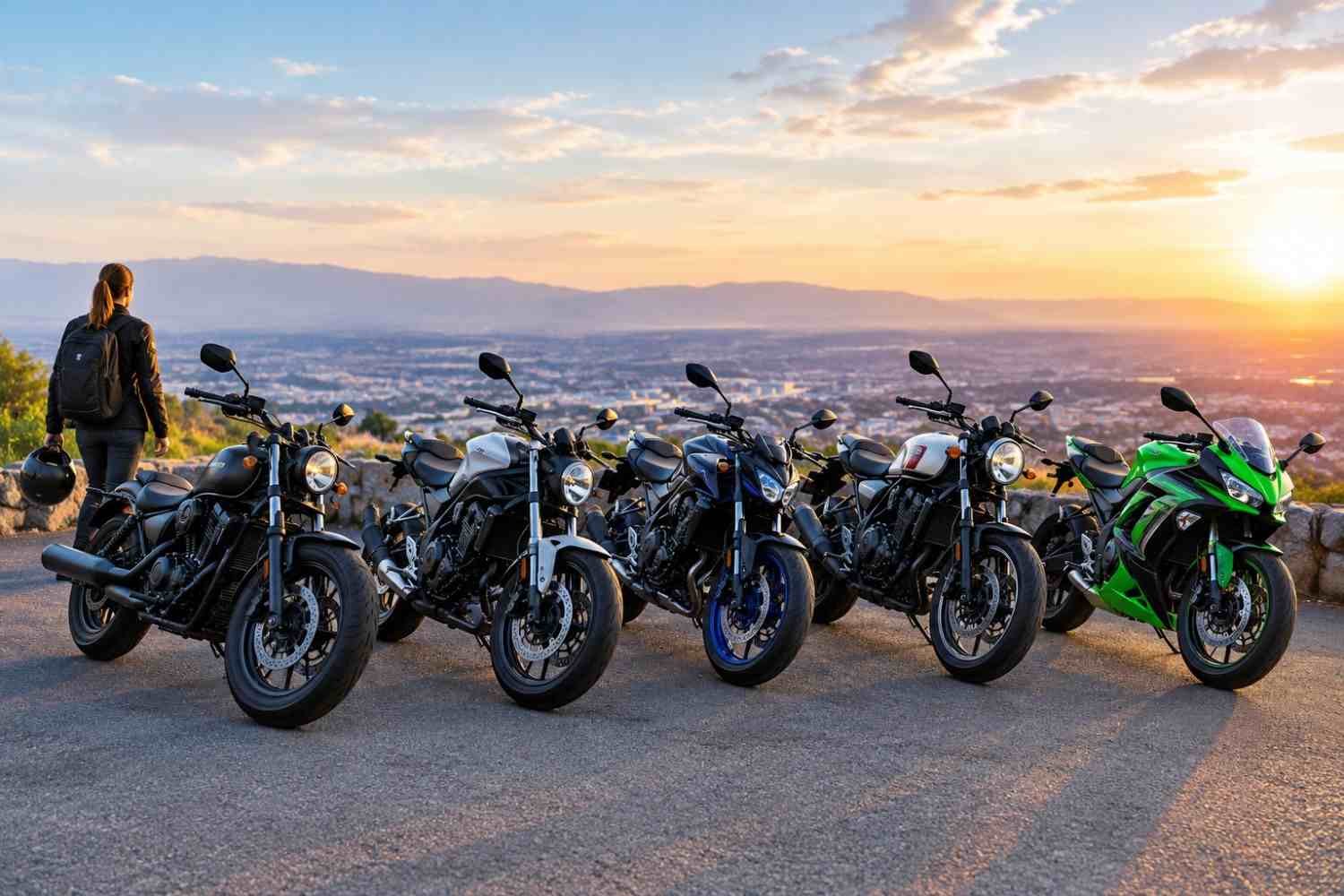
For new riders in the United States, the good news is that the 2026 motorcycle lineup includes several approachable options. There are small cruisers for relaxed rides, lightweight naked bikes for everyday use, and sport-style motorcycles for riders who prefer a more aggressive look.
The best beginner motorcycle for 2026 is not necessarily the smallest or least expensive model. It is the one you can handle confidently, operate comfortably, and maintain without stretching your budget.
1. Honda Rebel 300 E-Clutch: Best for an Approachable First Ride
The Honda Rebel 300 has long appealed to riders who like cruiser styling without the size and weight of a large touring motorcycle. The 2026 Rebel 300 E-Clutch adds another useful feature for beginners who are still getting comfortable with manual transmissions.
Its 286cc engine provides a manageable starting point, while the low 27.2-inch seat makes it easier for many riders to reach the ground at a stop. The riding position also suits relaxed trips around town.
Honda’s E-Clutch system allows riders to shift gears without operating the clutch lever in normal use, although the motorcycle still has a six-speed manual transmission and traditional foot shifter. That can reduce some of the work involved in stop-and-go traffic while new riders build their skills.
Why consider it: The Rebel 300 E-Clutch is worth a close look if you want cruiser styling, a low seat, and assistance with clutch operation.
One thing to consider: The low seat is helpful, but you should still check how the handlebars, foot controls, and overall riding position fit your body.
See the official 2026 Honda Rebel 300 E-Clutch specifications.
2. Honda CB300R: Best for Everyday Riding
Not every new rider wants a cruiser. Some prefer an upright motorcycle that feels at home on city streets and works well for everyday travel. The Honda CB300R fits that style.
It uses a 286cc liquid-cooled single-cylinder engine and has a compact design that makes it an option worth considering for newer riders. Its standard anti-lock braking system (ABS) is another useful feature to look for when comparing motorcycles.
The CB300R has a 31.6-inch seat height, so it sits noticeably higher than the Rebel 300. Riders with shorter inseams should check their reach before making a decision.
Its straightforward styling, manageable engine size, and everyday-road focus make it a sensible candidate for someone who wants a simple street motorcycle rather than a full-sized sport bike.
Why consider it: It suits riders who want a clean, lightweight-looking street bike for commuting, errands, and learning the basics of road riding.
One thing to consider: Seat height and riding comfort vary from person to person, so sit on the bike before deciding.
You can review the 2026 Honda CB300R on Honda’s official website.
3. Yamaha MT-03: Best for Riders Who Like a Sporty Street Bike
The Yamaha MT-03 offers a different personality from the two Honda models. Its styling is sharper, the riding position is upright, and its 321cc parallel-twin engine gives it a broader powerband than many small single-cylinder motorcycles.
Yamaha lists a wet weight of 373 pounds and a seat height of 30.7 inches for the MT-03. Those figures provide a useful starting point when judging whether the bike will be manageable for you, although weight distribution and seat shape also affect how a motorcycle feels at a standstill.
The MT-03 can be a practical choice for city riding and weekend trips. Its six-speed transmission also gives riders room to learn smooth shifting and engine control as they gain experience.
It looks sporty without requiring you to adopt the low, forward-leaning position associated with some fully faired sport motorcycles.
Why consider it: Choose the MT-03 if you like modern styling, an upright riding position, and a motorcycle that can handle regular street use.
One thing to consider: Sit on the bike and practice moving it around while stationary, with the engine off. That will tell you more about its physical size and balance than its engine displacement alone.
Check the 2026 Yamaha MT-03 specifications before visiting a dealer.
4. Royal Enfield Hunter 350: Best for Classic Styling
For riders who prefer a traditional appearance, the Royal Enfield Hunter 350 is another motorcycle worth considering. Its styling takes inspiration from older roadsters, but the bike has modern features for everyday use.
The Hunter uses a 350cc fuel-injected engine and has a seat height of approximately 31.1 inches. Royal Enfield also lists dual-channel ABS, which can help prevent wheel lockup during braking when the system operates within its limits.
Its compact proportions make it a natural candidate for city streets, casual rides, and shorter commutes. The overall experience is less about sharp sport-bike performance and more about enjoying a straightforward, classic-looking motorcycle.
Before buying, think about where you will ride most often. A bike that works nicely for local trips may not be the best fit for frequent high-speed highway travel or long-distance touring.
Why consider it: It is a good option for riders who appreciate retro styling and prefer an unhurried approach to motorcycling.
One thing to consider: Check local dealer availability, service support, and parts access in your area before committing to a particular model.
Explore the Royal Enfield Hunter 350 for model details and current US-market information.
5. Kawasaki Ninja 500 ABS: Best for a Sporty Look and More Room to Grow
Some beginners are drawn to the appearance of a sport motorcycle but do not want an extreme riding position. The Kawasaki Ninja 500 ABS offers fully faired styling with a riding position designed for road use.
Its 451cc parallel-twin engine is more powerful than the smaller motorcycles discussed above. That extra performance may be useful for riders who expect to travel on highways, but it also calls for a careful and realistic assessment of your experience.
The ABS version includes anti-lock braking, and the model features an assist-and-slipper clutch. These features are useful to understand when comparing the Ninja with other motorcycles, but they do not replace good judgment, training, or smooth control inputs.
A new rider who has completed training and feels comfortable with the bike’s size and power may find it a rewarding choice. Someone who has never operated a motorcycle before may prefer to begin with a smaller, less demanding option.
Why consider it: The Ninja 500 ABS is worth considering if you want sport-bike styling and expect to develop into regular highway riding.
One thing to consider: Do not buy a more powerful motorcycle simply because you think a smaller bike will become boring. Confidence and sound technique matter more than chasing engine size.
Review the 2026 Kawasaki Ninja 500 lineup to compare available versions and current specifications.
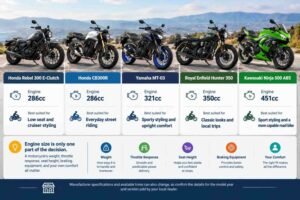
Beginner Motorcycle Comparison
| Motorcycle | Engine | Best suited for |
|---|---|---|
| Honda Rebel 300 E-Clutch | 286cc | Low seat and cruiser styling |
| Honda CB300R | 286cc | Everyday street riding |
| Yamaha MT-03 | 321cc | Sporty styling and upright comfort |
| Royal Enfield Hunter 350 | 350cc | Classic looks and local trips |
| Kawasaki Ninja 500 ABS | 451cc | Sport styling and a more capable road bike |
Engine size is only one part of the decision. A motorcycle’s weight, throttle response, seat height, braking equipment, and your own comfort all matter. Manufacturer specifications and available trims can also change, so confirm the details for the model year and version sold by your local dealer.
What Should You Look for in Your First Motorcycle?
Comparing models is a good starting point, but a few practical checks can make the final decision easier.
Seat Height and Overall Fit
You should feel comfortable reaching the controls and managing the motorcycle at walking speed. Being able to place both feet flat on the pavement is not a requirement for every rider, but you should be able to stabilize the bike confidently using your normal technique.
Ask the dealer whether the bike’s seat, suspension, or available accessories can be adjusted to suit you.
Manageable Power
A motorcycle should respond predictably when you accelerate, slow down, and change gears. A smaller engine can make these lessons less intimidating, particularly when you are still learning to control the throttle and clutch.
There is no single engine size that is perfect for every beginner. Choose a motorcycle you can control comfortably rather than one selected mainly for its specifications.
ABS and Other Safety Features
Anti-lock braking systems can help reduce wheel lockup during hard braking, particularly on slippery surfaces. They are worth comparing when choosing between similar motorcycles.
ABS does not eliminate the need to learn proper braking technique, and it cannot overcome every loss of traction. It should be one consideration among several, not the only reason to buy a bike.
Total Ownership Cost
The advertised price is only part of the expense. Remember to account for insurance, a properly fitted helmet, protective riding gear, maintenance, registration, and fuel.
Insurance costs can differ significantly between models and riders. Get a quote before purchasing, especially if you are comparing a small standard motorcycle with a fully faired sport model.
A well-maintained used motorcycle may also be worth considering. For a first purchase, condition, service history, and a professional inspection can matter more than having the latest model year.
New Riders Should Invest in Training and Protective Gear
Before riding on public roads, check the motorcycle licensing and endorsement requirements in your state. A motorcycle safety course can help you learn essential skills in a controlled environment.
The Motorcycle Safety Foundation’s Basic RiderCourse covers fundamental controls, starting and stopping, shifting, turning, and emergency maneuvers. Motorcycles are provided for the course, although specific arrangements vary by training location.
Wear a properly fitted DOT-compliant helmet, eye protection, gloves, a protective jacket, long pants, and over-the-ankle footwear. Choose gear that fits correctly and is suitable for the weather and type of riding you expect to do.
The first few months are a time to practice patiently. Spend time in a safe, controlled area before dealing with busy intersections, heavy traffic, or unfamiliar roads.
Buying a Motorcycle From Another State?
You may find a suitable first motorcycle at a dealership or through a private seller several states away. Before arranging a purchase, check the vehicle documents, title status, registration requirements, and the seller’s arrangements for releasing the bike.
If you do not feel ready to ride a newly purchased motorcycle over a long distance, professional motorcycle transport is another option to consider. It can help you arrange delivery without requiring a long ride home.
NG Auto Haulers LLC offers information about door-to-door bike shipping and enclosed bike transport for customers comparing motorcycle transportation options.
Final Thoughts
The best beginner motorcycles for new riders in 2026 offer a balance of manageable handling, comfortable ergonomics, useful safety features, and a price that makes sense for the owner.
The Honda Rebel 300 E-Clutch is a strong option for riders who value a low seat and easier clutch operation. The Honda CB300R and Yamaha MT-03 suit those who prefer street-bike styling, while the Royal Enfield Hunter 350 appeals to riders who enjoy a classic look. The Kawasaki Ninja 500 ABS deserves consideration from beginners who have trained properly and are comfortable with its additional power.
Take time to compare the bikes in person, check insurance costs, and arrange proper training before buying. A motorcycle that feels comfortable and inspires confidence is a better starting point than one chosen for its looks or engine size alone.
Frequently Asked Questions
What is the best motorcycle for a complete beginner in 2026?
The Honda Rebel 300 E-Clutch is worth considering for its low seat and clutch-assistance technology. The Honda CB300R is another option for riders who prefer a standard street bike. The best choice depends on body fit, experience, budget, and intended use.
Is a 300cc motorcycle enough for a beginner in the USA?
For many new riders, a 300cc motorcycle can provide enough performance for learning, commuting, and local trips. Highway suitability depends on the particular model, traffic conditions, rider experience, and the type of roads involved.
Should beginners buy new or used motorcycles?
Either can work. A new motorcycle may offer a factory warranty and known condition, while a used one can reduce the initial expense. Check the maintenance history and overall condition of any used bike, and have a qualified mechanic inspect it when appropriate.
Is ABS important on a beginner motorcycle?
ABS is a useful safety feature because it can help prevent wheel lockup during braking. When comparing similar models, it is worth considering an ABS-equipped version, while remembering that training and responsible riding remain essential.
Can I ship a motorcycle I buy from another state?
Yes. Motorcycle transport services can help arrange pickup and delivery when you purchase a bike far from home. Confirm the motorcycle’s condition, pickup access, transport arrangements, and delivery timeframe before booking.