
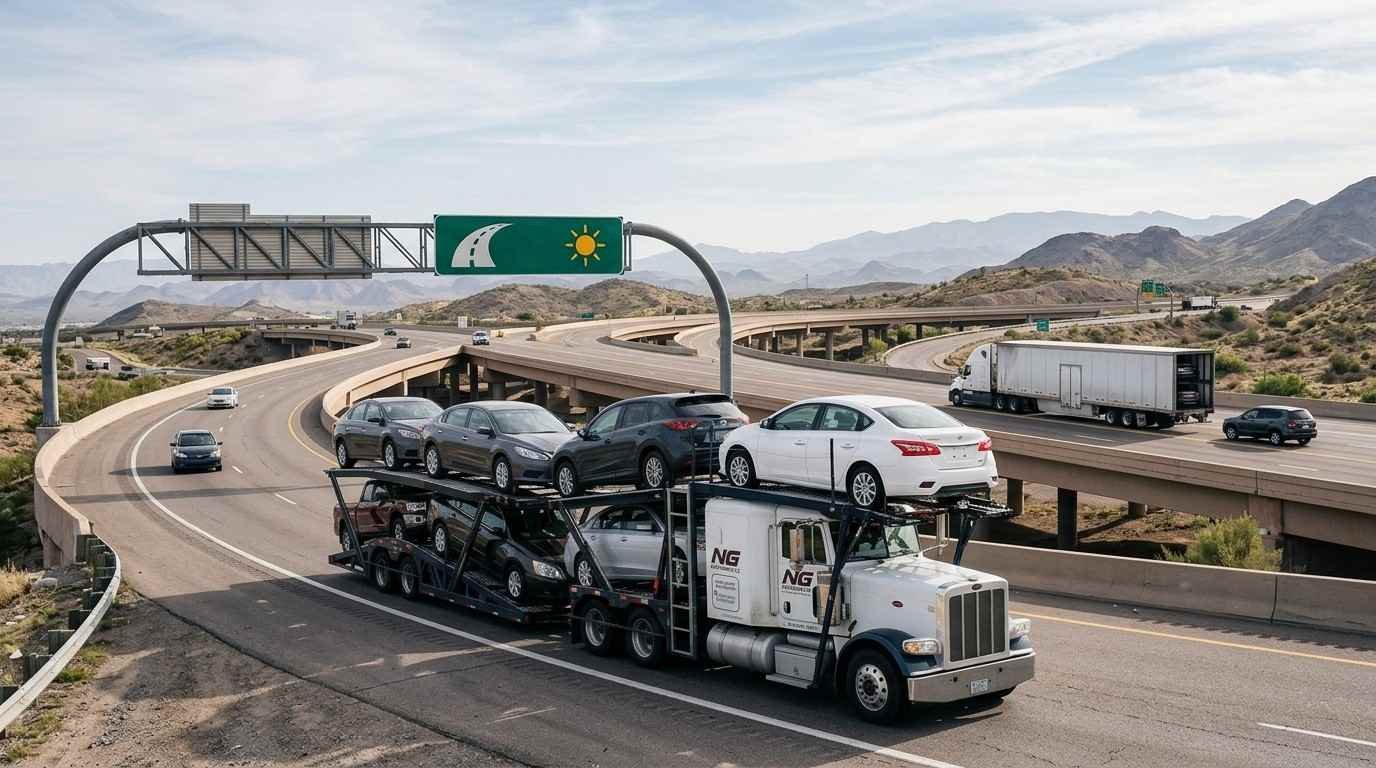
When you hand your car over to an auto transport company, you naturally want to know when it will be back in your hands.
That answer depends on the trip.
A car going from Chicago to Indianapolis is not going to follow the same schedule as a vehicle moving from California to New York. The distance is different, the available carrier routes are different, and the number of days needed to arrange pickup can change as well.
For most car shipments within the continental United States, planning around one to two weeks is a reasonable starting point. Move.org’s research puts many shipments at about 7–16 days when pickup time is included. Actual transport can be shorter, especially on a nearby route, while a long cross-country move can take longer.
The part that causes the most confusion is that “shipping time” can mean two different things.
Pickup Takes Time Too
Your car has to reach the carrier before it can start the journey.
That sounds obvious, but it is often left out when people compare delivery estimates online.
A carrier needs to be available, heading in the right direction, and able to fit your vehicle into its schedule. Move.org suggests allowing around five days for pickup, and Sherpa also uses a five-business-day standard pickup window for regular service.
So a shipment might look like this:
You book the transport.
A carrier is arranged.
The car is picked up.
The vehicle travels to the destination.
The carrier completes delivery.
The actual driving time is only one part of the process.
This is why a company telling you “seven days” may be referring to transit rather than the number of days from booking to delivery.
A Nearby State Is Different From a Cross-Country Move
Distance gives you the first clue.
For shorter routes, the vehicle may only spend a day or two on the carrier. Montway currently estimates around 1–3 days for routes up to 500 miles, 3–7 days for routes between 500 and 1,500 miles, and 7–14 days for longer routes. Those figures do not include the pickup period.
Move.org gives a similar picture while allowing additional time for pickup. Its estimates put a shipment under 500 miles at roughly seven days from booking through delivery, while a move of more than 2,500 miles can reach around 16 days in total.
That is why a customer shipping a car 300 or 400 miles may have a very different experience from someone sending a vehicle from the East Coast to the West Coast.
There is no single number that works for both.
Why Doesn’t the Truck Just Drive Straight There?
Because the truck is usually carrying more than one vehicle.
A carrier might pick up one car in California, another in Nevada, another farther east, and make several deliveries before the trip is finished. The driver also has to deal with normal road conditions, traffic, fuel stops and required rest periods.
A private driver making one direct journey has a much simpler schedule.
An auto carrier does not.
Move.org notes that the number of vehicles on a carrier, additional stops, traffic and weather can all add time to a shipment.
This is also why a delivery estimate is usually given as a window instead of an exact date and time.
The Pickup City Can Change the Schedule
Where the car starts matters.
Major cities and highways tend to have more transport activity. A carrier may already be passing through the area, which makes it easier to include another vehicle in the route.
A rural pickup can be different. The driver may need to travel farther before reaching the main corridor, and that extra distance has to fit into the overall route.
This is relevant for customers throughout the country.
Someone shipping from Chicago can start by looking at our Car Shipping Chicago service. Customers elsewhere in Illinois can review Car Shipping Services in Illinois.
For other major starting points, we also have location-specific information for Car Shipping California, Car Shipping Texas, Car Shipping Florida, and Car Shipping New York.
The pages are different because the routes are different. A California-to-New York shipment has very little in common with a short move within Illinois.

Your Car Can Affect the Timeline
Not every vehicle is equally easy to load and transport.
A standard sedan is straightforward for most carriers. A large pickup, modified vehicle, classic car or other specialty vehicle may need a carrier with the right equipment and enough space.
A non-running vehicle can add another step. Instead of simply driving it onto the trailer, the carrier may need special equipment to load it.
Enclosed transport can also involve a narrower choice of carriers because enclosed trailers usually carry fewer vehicles than open carriers. Sherpa notes that specialty vehicles and enclosed shipments can require additional planning.
For a classic, collector or high-value vehicle, some owners prefer Enclosed Car Transport because the vehicle travels inside a covered trailer.
The right option is not always the fastest one. It depends on what is being shipped and what matters most for that particular move.
Weather Can Add a Few Days
Cross-country transport means crossing different parts of the country, sometimes during very different weather conditions.
A carrier may leave California in clear weather and run into snow farther east. Heavy rain, flooding, high winds, road closures and winter conditions can all slow a trip.
Sherpa specifically lists bad weather and road conditions as factors that can extend delivery times.
That is one reason it is a bad idea to schedule your entire move around a single guaranteed arrival day unless your transport provider has given you a specific service with that commitment.
A little room in the schedule is much safer.
Summer and Seasonal Moves Can Be Busier
Timing on the calendar matters too.
Sherpa notes that demand can rise during January and the summer months. More people are relocating, moving for work, attending school or changing residences during these periods, which can increase the number of vehicles needing transport.
Florida is a good example of a seasonal market.
When snowbirds move between Florida and northern states, more vehicles can be traveling on those routes around the same time. If your plans involve seasonal relocation, Snowbird Car Shipping is the relevant service to look at.
It is another reason not to leave a time-sensitive shipment until the last minute.
Does Door-to-Door Service Make Delivery Faster?
Not automatically.
Door-to-door shipping is mainly about convenience. The carrier picks up and delivers the vehicle as close as practical to the requested locations.
There are limits, though. A large car carrier cannot always reach a narrow residential street, dead-end road or restricted-access area. When that happens, the driver may arrange a nearby location that is safe and accessible.
So the benefit is convenience, not a guaranteed shorter transit time.
You can learn more about the service on our Door-to-Door Car Shipping page.
How Early Should You Book?
Two to four weeks ahead is a sensible planning window for many customers, particularly when the pickup date matters. Move.org recommends booking around two to four weeks before the move.
That does not mean a last-minute shipment is impossible.
It simply gives you fewer scheduling problems when you have a fixed deadline. If the car needs to be there before a new job starts, before a house move is completed, or before someone arrives in a new state, leaving some extra time is helpful.
The same applies during busy seasons.
What About State-to-State Car Shipping?
“State-to-state” covers a lot of ground.
A vehicle moving from Illinois to Indiana is a short interstate shipment. New York to California is a completely different job.
The distance between the actual pickup and delivery addresses matters far more than the state names themselves. That is why a carrier can only give you a useful delivery window once the route is known.
NG Auto Haulers LLC offers State-to-State Car Shipping for customers moving vehicles between states.
For longer routes, you can also explore Cross-Country Car Shipping and see how the service fits a coast-to-coast move.
What Should You Expect From NG Auto Haulers LLC?
At NG Auto Haulers LLC, the delivery estimate should be based on the shipment itself.
The pickup area, destination, vehicle type, transport method, requested dates and current road conditions all have a part in the schedule. That makes a route-specific estimate much more useful than a general number taken from an article.
Customers who are new to vehicle shipping can read How It Works to understand the basic process before booking.
Once the pickup and delivery locations are known, you can request a car shipping quote based on your vehicle and route.
So, How Long Should You Plan For?
For a normal shipment within the continental USA, one to two weeks is a reasonable overall planning range, with the exact timeline depending on distance, pickup availability, route, weather and the vehicle being transported. Research from Move.org puts many shipments around 7–16 days when pickup time is included, while Sherpa says actual cross-country transit can often take about 7–10 days.
Short routes may finish much sooner.
Very long routes can take longer.
The safest approach is to think in terms of a delivery window instead of one exact date. Once the carrier knows the route, the vehicle details and your preferred pickup period, the estimate becomes much more useful.
For your specific route, you can visit NG Auto Haulers LLC or request a quote and plan around the actual shipment rather than a nationwide average.